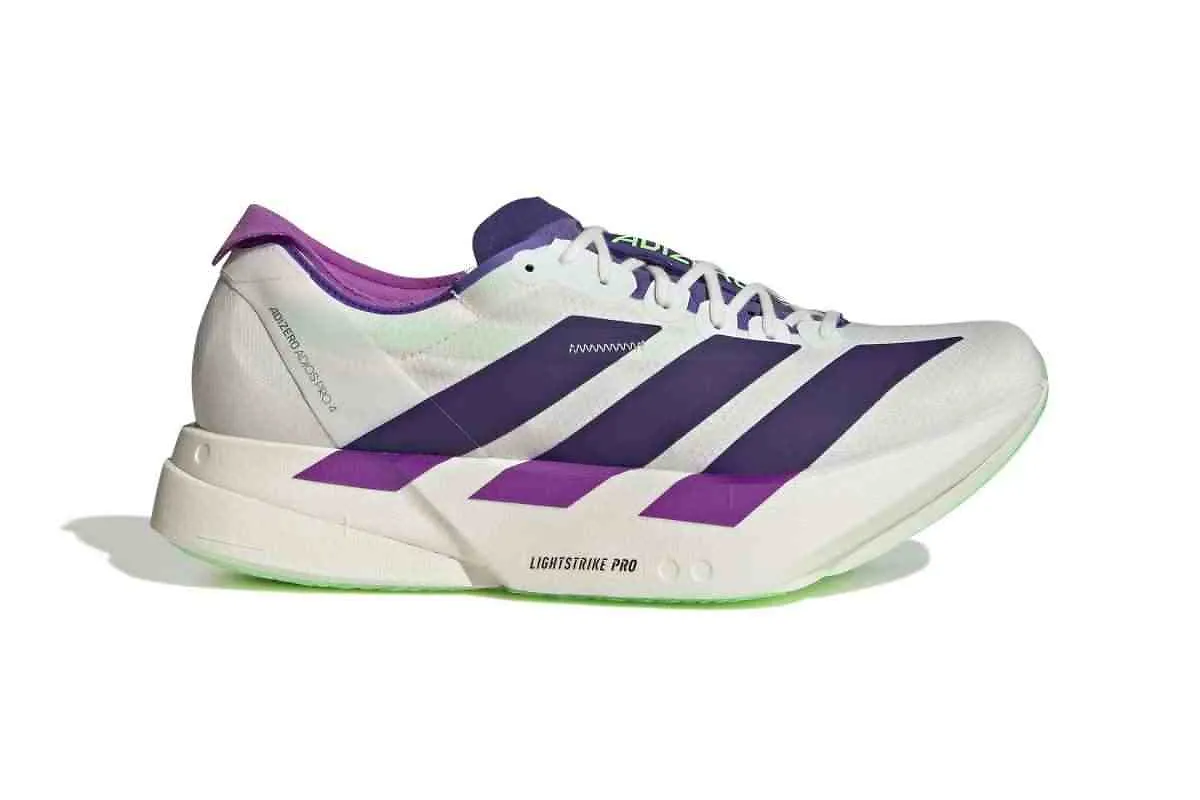
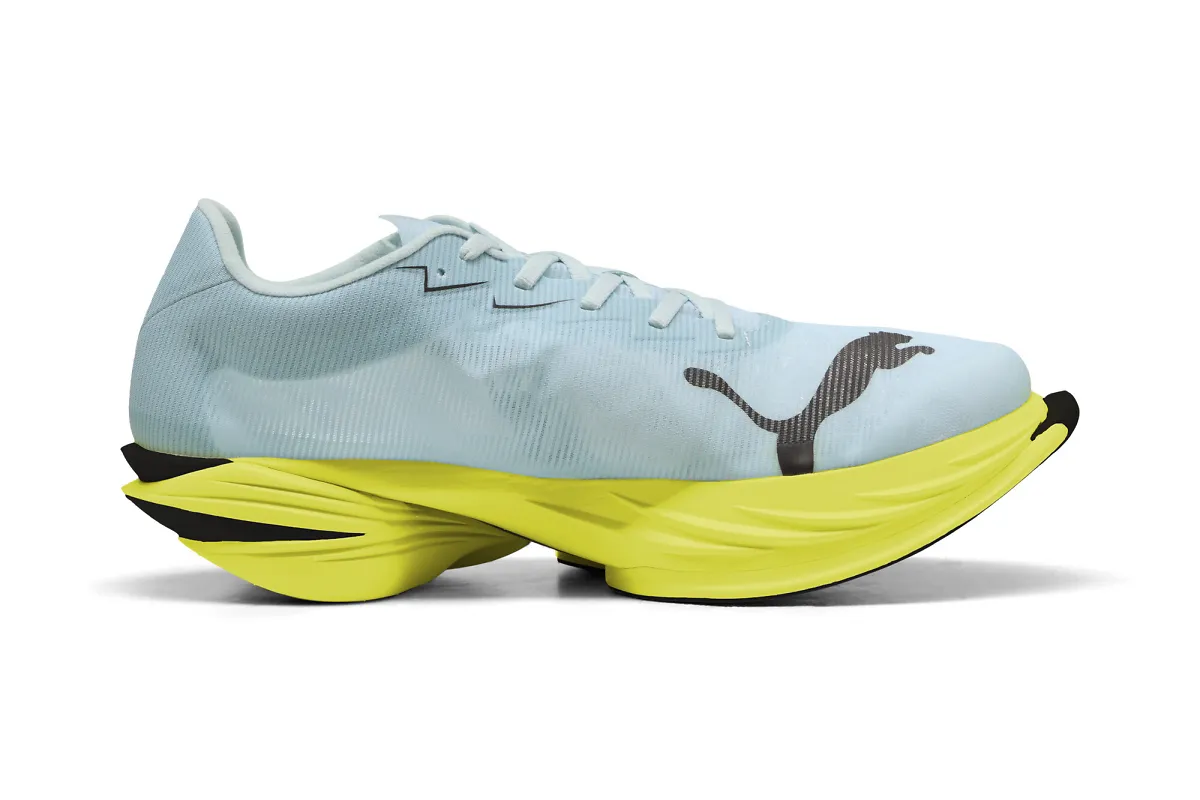
Adidas Adizero Adios Pro 4 vs Puma Fast-R Nitro Elite 3
A side-by-side comparison grounded in verdicts from 6 reviewers with every source linked. We don't invent quotes; every claim below is attributed.
Specs at a glance
Reviewers who wore both
Direct paired observations — reviewers who actually ran in both of these and wrote the contrast. This is the strongest comparative signal on the page.
More cushioned and protective with more foam underfoot, but heavier and less efficient; better choice for runners needing more support or running at slower marathon paces
Adios Pro 4 is 1.5 oz lighter and cheaper; Fast-R is more aggressive and niche for mid/forefoot strikers
Similar level of durability
Adios Pro 4 cheaper and wider, but foam degrades sooner, less stable plate system, and Puma preferred for marathon efficiency
Puma showed better running economy in oxygen exchange efficiency tests conducted before the race
Adios Pro 4 is softer and more accommodating but fit around the toes can be finicky; Fast-R3 felt more efficient for the reviewers at race pace
Lighter and more efficient with a wilder, more mechanical ride; less cushioned and less accommodating at slower paces but preferred by both reviewers for pure race performance
Reviewer was 2.23% less efficient in the Adios Pro 4 in lab testing; reviewer also finds both shoes require some mental focus on foot placement
Fast R3 was more efficient than the Adios Pro Evo in external university research
Adios Pro 4 slightly more forefoot stack and lower price, but less stable due to energy rods vs carbon plate; Puma foam lasts longer; Puma preferred at marathon pace
More versatile and available at less cash
Fast R3 preferred by both testers — more wow, better grip, more accommodating when tired, ~$200 cheaper.
Adidas Adizero Adios Pro 4 — what reviewers say
Ride profile: high cushion , neutral stability .
-
A strong marathon race shoe once fit is dialed in — the reviewer used it successfully at Chicago Marathon after making tweaks.
Fit:Required some personal tweaks to dial in before it worked well for this reviewer.
In their words: "worked out perfectly well"
-
Works well for half/full marathon but too soft for shorter, faster distances, loses pep quickly, and its softer Lightstrike Pro foam is linked to rod-snapping issues. Tier C.
In their words: "went a bit flat even quicker than Man City" · "just a few too many issues"
-
Ben Parkes calls this probably the best-value super shoe on the market, lightweight and fast, and a strong marathon race-day option.
Ride:Reviewer describes carbon rods (rather than a single plate) giving a similar propulsive effect.
In their words: "probably the best value super shoe" · "Lightweight, fast, used by so many"
-
The most comfortable of Ben's three race day picks — carbon rods instead of a plate allow more natural movement, making it an excellent choice for longer race distances.
In their words: "most comfortable for me" · "can move a little bit more"
Puma Fast-R Nitro Elite 3 — what reviewers say
Ride profile: high cushion , neutral stability .
-
Nick's current favourite race shoe for his upcoming Frankfurt Marathon — the efficient rocker and extended plate keep him moving well even late in a marathon, narrowly edging out the Metaspeed Sky Tokyo.
In their words: "incredibly efficient, really well designed" · "keeps pushing you on"
-
An aggressive, light, bouncy shoe best suited to 5K–10K or a push to half marathon rather than full marathon effort. Tier B.
In their words: "I think it's a little too aggressive" · "I like the lockdown, I like the lightness"
-
Ben Parkes finds the Fast-R Nitro Elite 3 a wild, bouncy, extremely fast racer best suited to 5K-10K efforts for strong midfoot/forefoot strikers, though its high price and unstable heel foam make it unsuitable for heel strikers or less experienced racers.
Ride:Very aggressive geometry and a long carbon plate for an explosive, bouncy ride; the soft rear midsole is unstable for heel strikers.
Fit:Size down half a size for a dialed-in race fit.
In their words: "a very wild ride" · "so much fun to run in"
-
Efficient and fast but Thomas feels it's a little less designed for form-breakdown than the DV8 Elite 4.
Ride:Lab-tested by BITR at Puma's facility as more efficient than their race shoes. Different sensation with the extended plate. Megan's half-marathon pick. Polarizing look — 'more embarrassing to be in the Fast-R 3 on a bad day cuz it looks crazy.'
In their words: "more efficient than other shoes" · "different sensation with this extended plate"
Who should buy which
Use cases the reviewers above actually call out — one bullet per distinct take, attributed. Where reviewers converge (e.g. "5K to half marathon" appearing across multiple takes) the agreement is a stronger buying signal than any single voice.
Consider the Adidas Adizero Adios Pro 4 if
- A marathon race-day shoe, also suited to 5K, 10K, and half marathon distances; good value since it's been out a couple of years. — Ben Parkes
- Any distance from short reps to marathon racing — The Run Testers
- Marathon racing; verdict deferred to 2025 list. — Kofuzi
- Marathon racing where bounce and pop matter most — The Running Channel
- The most versatile super shoe in the test — 5K through marathon. EDDBUD's overall winner at 19/25. — EDDBUD
- Runners targeting marathon or longer who want cushioned protection and are comfortable with the fit; recommended for those running slower than sub-3 marathon pace — The Run Testers
Consider the Puma Fast-R Nitro Elite 3 if
- 10K to half marathon racing — Ben Is Running
- Short-distance racing for mid/forefoot strikers seeking an aggressive ride — EDDBUD
- Shorter race distances with a forefoot-biased landing — EDDBUD
- Top marathon racer — especially if you can maintain form late — The Run Testers
- Marathon racing for runners seeking efficiency gains; a top racing option alongside the ASICS Metaspeed Sky Paris — The Run Testers
- Forefoot-striking neutral runners with no stability needs, chasing all-out pace — Doctors of Running
Frequently asked questions
What's the difference between the Adidas Adizero Adios Pro 4 and the Puma Fast-R Nitro Elite 3?
The Adidas Adizero Adios Pro 4 is a race shoe and the Puma Fast-R Nitro Elite 3 is a race shoe. By the numbers, the Adidas Adizero Adios Pro 4 weighs 201g, has a 39mm heel stack and a 6mm drop, while the Puma Fast-R Nitro Elite 3 weighs 170g, has a 39mm heel stack and an 8mm drop. MSRP is $220 for the Adidas Adizero Adios Pro 4 and $300 for the Puma Fast-R Nitro Elite 3.
Should I buy the Adidas Adizero Adios Pro 4 or the Puma Fast-R Nitro Elite 3?
Ben Parkes on the Adidas Adizero Adios Pro 4: A marathon race-day shoe, also suited to 5K, 10K, and half marathon distances; good value since it's been out a couple of years. Ben Is Running on the Puma Fast-R Nitro Elite 3: 10K to half marathon racing.
Per Ben Parkes, Ben Is Running.
Has anyone reviewed both the Adidas Adizero Adios Pro 4 and the Puma Fast-R Nitro Elite 3?
Yes — The Run Testers and EDDBUD directly compared the Adidas Adizero Adios Pro 4 and the Puma Fast-R Nitro Elite 3 in their reviews.
Per The Run Testers, EDDBUD.
Which is lighter, the Adidas Adizero Adios Pro 4 or the Puma Fast-R Nitro Elite 3?
The Puma Fast-R Nitro Elite 3 is lighter, at 170g versus 201g (men's 9) — about 31g less.
Which is cheaper, the Adidas Adizero Adios Pro 4 or the Puma Fast-R Nitro Elite 3?
The Adidas Adizero Adios Pro 4 is cheaper at $220 versus $300 MSRP — about $80 less.