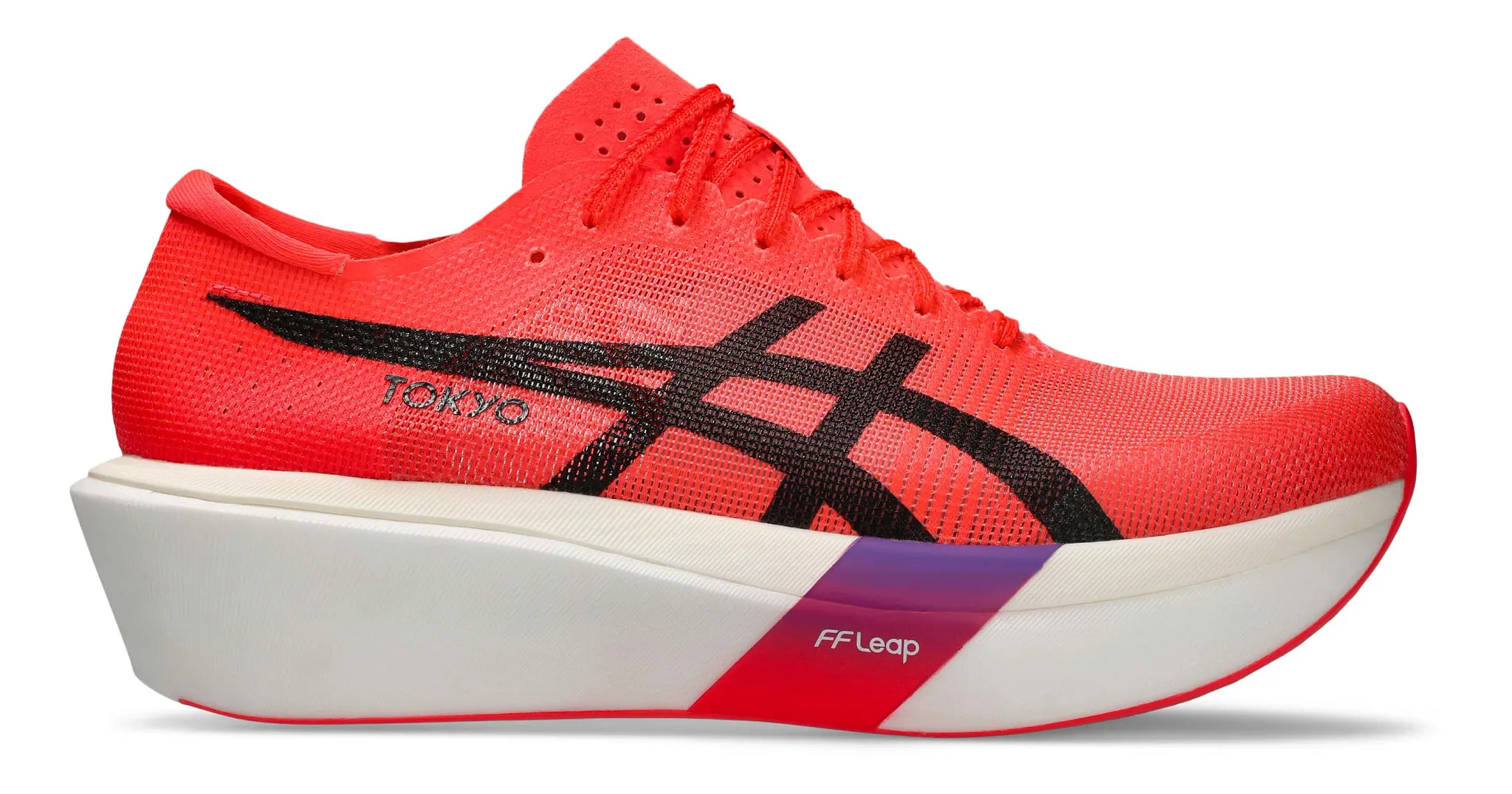
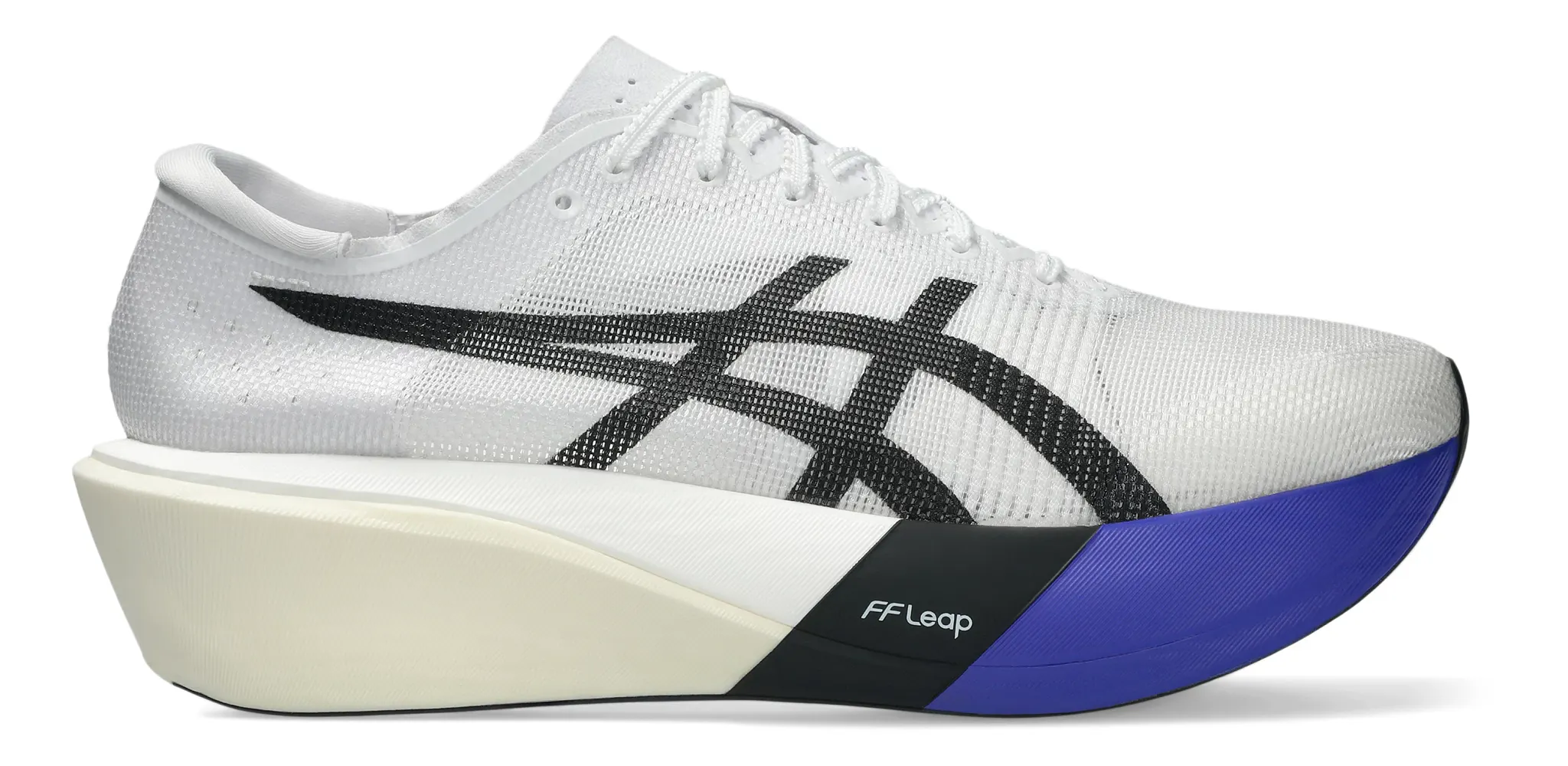
ASICS Metaspeed Sky/Edge Tokyo vs ASICS Metaspeed Edge Paris
A side-by-side comparison grounded in verdicts from 4 reviewers with every source linked. We don't invent quotes; every claim below is attributed.
Specs at a glance
Reviewers who wore both
Direct paired observations — reviewers who actually ran in both of these and wrote the contrast. This is the strongest comparative signal on the page.
Sky felt faster and more racy at top speed over 10K; Edge felt less racy but potentially more stable and forgiving for marathon distance
Sky has plate positioned deeper in the foam, giving softer forefoot feel before plate engages; Edge has plate closer to the foot
Sky Tokyo sits the carbon plate higher in the forefoot than the Edge Tokyo.
Sky uses a flatter plate; Edge has a more curved plate closer to the Vaporfly style; EDDBUD prefers the Sky
Sky favors forefoot strikers with more foam up front; Edge flips the orientation for heel strikers with an aggressively sloped plate
Specs are identical (39.5mm heel / 34.5mm forefoot / 5mm drop / 170g) but the Sky places the new Flight Foam Leap below the plate in the heel and uses a flatter plate, giving a wilder, more trampoline-like heel and less stable ride; preferred by David for half marathon / marathon paces.
Sky Tokyo sits the carbon plate higher in the forefoot than the Edge Tokyo.
Same stack and drop but Sky has Flight Foam Leap below the plate with a flatter plate, giving a softer, bouncier heel and firmer forefoot; Edge has Flight Foam Turbo Plus below the plate and a spooned plate, giving a more structured heel and bouncier forefoot.
Tokyo models have a noticeably wider heel platform with more sole flaring than the Paris version for better rear-foot stability.
Same upper and geometry; Sky has more FF Leap (softer/bouncier) close to foot and is more propulsive, Edge is more stable but feels softer/slower for Robbie
The Sky Tokyo is designed for stride-lengthening runners with a thicker forefoot midsole and higher plate position, versus the Edge which targets high-cadence runners.
Softer, springier FF Blast layer sits at the bottom rather than the top; preference between the two comes down to personal taste
Sky is softer with a flatter plate and favors stride lengtheners/mid-forefoot strikers; Edge is slightly more resilient and durable with a more pronounced rocker for cadence-focused runners and heel strikers.
Same stack and drop, but Edge has Flight Foam Turbo Plus in the heel plus a spooned plate for a firmer, more structured heel and a bouncier, more explosive forefoot, whereas Sky puts Flight Foam Leap below a flatter plate for a softer, bouncier heel and firmer forefoot.
Edge has FF Leap directly under the foot (Sky flips the foams); Edge feels a bit more stable and both reviewers prefer the Edge in this iteration.
The Sky has Leap on top with a straight plate and is expected to feel more explosive but less stable; the Edge inverts the foam stack and uses a sculpted plate, and the Edge's Turbo Plus heel is more forgiving when tired.
Edge Tokyo has more fluidity and firmer push from the back due to FF Turbo Plus wedge; Sky Tokyo feels softer at the heel and slightly bouncier overall; plate sits lower/more scooped in the Edge so it's less noticeable underfoot.
Edge Tokyo feels closer to the previous Edge than the Sky Tokyo feels to its predecessor
The Edge Tokyo feels more stable thanks to FF Turbo Plus in the heel, though the Sky Tokyo is the more hyped pick
Edge felt less racy than the Sky at 10K top speed but potentially better suited to marathon distance due to more stable heel foam
Fraternal twin at the same 5.9 oz / 170 g weight; Sky has inverted foam orientation (dense FF Turbo Plus on top, soft FF Leap on bottom) and a wider forefoot plate for forefoot strikers, while Edge puts dense foam in the heel and soft FF Leap on top for heel strikers; Sky has red outsole rubber and a forefoot cutout, Edge has black rubber and a lateral heel cutout.
Very similar uppers and names but foam orientation and plate angle are flipped; Sky for forefoot strikers, Edge for heel strikers
Same specs (39.5mm heel / 34.5mm forefoot / 5mm drop / 170g) but the Edge uses a spooned plate with Flight Foam Leap above the plate in the forefoot, yielding a more controlled heel and snappier, more responsive forefoot; preferred for 5K/10K and courses with turns.
Plate sits lower in the forefoot and is more scooped; preference between the two comes down to personal taste
Edge has plate closer to the foot (intended for cadence runners); Sky has plate deeper in foam (intended for striders)
Edge is slightly denser in the heel, more rocker-driven, and better for heel strikers and cadence runners; Sky is softer with a flatter plate and favors stride lengtheners.
Edge Tokyo is more responsive, more stable, and more durable; Sky Tokyo is softer and may suit longer distances (half/full marathon) better, but the Edge is preferred after initial miles.
ASICS Metaspeed Sky/Edge Tokyo — what reviewers say
Ride profile: maximal cushion , neutral stability .
-
A popular, versatile race shoe that works well for most runners, though this reviewer personally struggles with blistering in it.
Fit:This reviewer personally gets blistering in this shoe due to its setup, despite generally getting on well with other ASICS shoes.
In their words: "a bit of a bargain"
-
Ran a 2:24 marathon at Loch Ness in the Sky Tokyo; the dual-density FF Leap/Turbo Plus midsole and high forefoot plate give a very bouncy ride he rates just behind the Fast-R Nitro Elite 3.
In their words: "really bouncy shoe" · "a lot of spring"
-
A great marathon-paced racer, though the softer midsole and flatter plate feel less versatile across paces than the previous Sky, with foam durability a slight concern. Tier B.
In their words: "a great shoe, though very much anchored in marathon pace" · "the foam does really take a beating"
-
A very fast, lightweight racing shoe the reviewer uses for shorter race distances (5K/10K), while preferring the Edge for half marathon and marathon.
In their words: "extremely fast and very lightweight"
ASICS Metaspeed Edge Paris — what reviewers say
Ride profile: maximal cushion , neutral stability .
-
A popular, versatile race shoe that works well for most runners, though this reviewer personally struggles with blistering in it.
Fit:This reviewer personally gets blistering in this shoe due to its setup, despite generally getting on well with other ASICS shoes.
-
Rated a tier above the Sky Tokyo thanks to a more fun, energized ride at faster 10K/half-marathon paces from the softer forefoot FF Leap foam, and better durability. Tier A.
In their words: "it's also a down side more durable" · "just makes it a lot more fun and exciting to run in"
-
The Run Testers rank the Metaspeed Edge Tokyo joint-second among racing shoes — very light and bouncy, excelling over long distances, with some team members running their fastest marathons in it.
In their words: "very lightweight and bouncy designs" · "notched our fastest marathons" · "great racing shoe"
-
The reviewer's current marathon race shoe of choice — extremely fast, lightweight, and grippy, with good versatility across race distances up to the marathon.
In their words: "extremely fast and very lightweight" · "one of the lightest race shoes out there"
Who should buy which
Use cases the reviewers above actually call out — one bullet per distinct take, attributed. Where reviewers converge (e.g. "5K to half marathon" appearing across multiple takes) the agreement is a stronger buying signal than any single voice.
Consider the ASICS Metaspeed Sky/Edge Tokyo if
- A versatile, lightweight race shoe for a range of distances, including marathons. — Ben Parkes
- 5K, 10K, and half marathon racing — particularly when going at top speed and striding out for a PB attempt — FORDY RUNS
- Racing from 5K up to the marathon — The Run Testers
- Races from 5K to marathon for runners who prefer a light, responsive, and poppy carbon plate shoe — The Run Testers
- Marathon racing and any distance where a softer, bouncier carbon-plated feel is preferred, especially on undulating courses. — The Run Testers
- Lighter runners who can maintain form over long races — EDDBUD
Consider the ASICS Metaspeed Edge Paris if
- Same as Sky Paris — 5K to half marathon racing. — EDDBUD
- 5K to half marathon racing and speed workouts for intermediate to advanced runners who can tolerate a lighter, less structured shoe — Doctors of Running
- Cadence-style racers at 5K–half marathon distances who want extra stack over the Vaporfly 4. — EDDBUD
- Runners who want a stable, structured heel with a lively, bouncy forefoot toe-off for 5K through marathon racing — Doctors of Running
- Marathon racing, including non-PR efforts, for runners who want an extremely lightweight race shoe with balanced cushioning. — Believe in the Run
- Racing (10K up to marathon) for cadence-focused runners looking for a light, lively race shoe with more forgiving heel stability. — FORDY RUNS
Frequently asked questions
What's the difference between the ASICS Metaspeed Sky/Edge Tokyo and the ASICS Metaspeed Edge Paris?
The ASICS Metaspeed Sky/Edge Tokyo is a race shoe and the ASICS Metaspeed Edge Paris is a race shoe. By the numbers, the ASICS Metaspeed Sky/Edge Tokyo weighs 159g, has a 40mm heel stack and a 5mm drop, while the ASICS Metaspeed Edge Paris weighs 159g, has a 40mm heel stack and a 5mm drop. MSRP is $270 for the ASICS Metaspeed Sky/Edge Tokyo and $270 for the ASICS Metaspeed Edge Paris.
Should I buy the ASICS Metaspeed Sky/Edge Tokyo or the ASICS Metaspeed Edge Paris?
Ben Parkes on the ASICS Metaspeed Sky/Edge Tokyo: A versatile, lightweight race shoe for a range of distances, including marathons. EDDBUD on the ASICS Metaspeed Edge Paris: Same as Sky Paris — 5K to half marathon racing.
Per Ben Parkes, EDDBUD.
Has anyone reviewed both the ASICS Metaspeed Sky/Edge Tokyo and the ASICS Metaspeed Edge Paris?
Yes — FORDY RUNS, Believe in the Run, The Run Testers, EDDBUD, Kofuzi, Doctors of Running, and Run Testers directly compared the ASICS Metaspeed Sky/Edge Tokyo and the ASICS Metaspeed Edge Paris in their reviews.
Per FORDY RUNS, Believe in the Run, The Run Testers, EDDBUD, Kofuzi, Doctors of Running, Run Testers.