ASICS Superblast 2 vs HOKA Skyward X
A side-by-side comparison grounded in verdicts from 5 reviewers with every source linked. We don't invent quotes; every claim below is attributed.
Specs at a glance
Reviewers who wore both
Direct paired observations — reviewers who actually ran in both of these and wrote the contrast. This is the strongest comparative signal on the page.
Superblast is ~70g lighter, more breathable, more versatile, more forgiving foam without the plate; Ed picks the Superblast over Skyward X if he could only have one.
Reviewer rejects the framing that Skyward X competes with Superblast — Skyward X is not a versatile fast cruiser.
Superblast 2 is much lighter, more breathable, more versatile and runner-driven; Skyward X is heavier and more 'controlling' via its carbon plate rocker — Ed prefers the Superblast 2 for almost everything.
Similar overall stack height but Superblast doesn't feel as tall walking around as the Skyward X does.
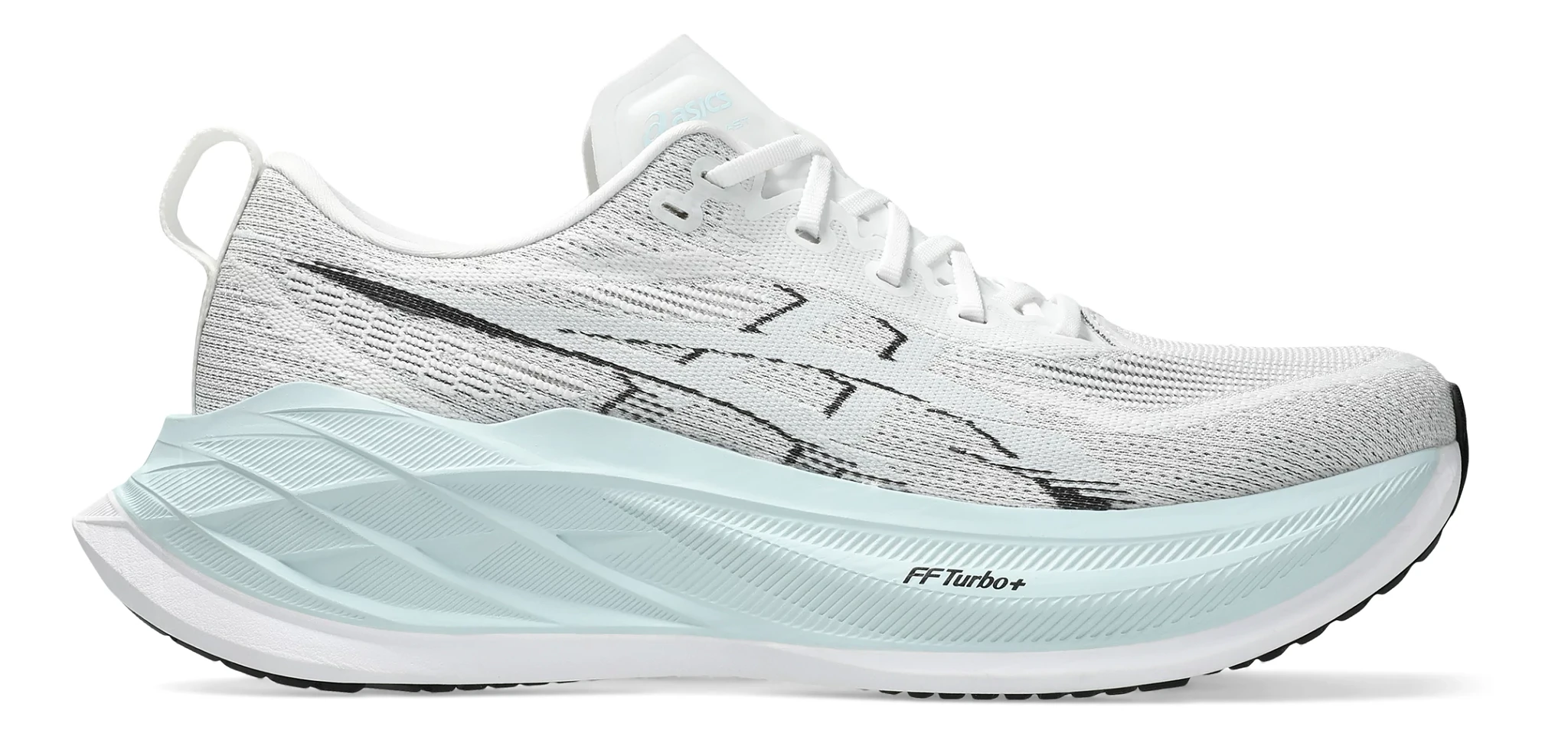
ASICS Superblast 2 — what reviewers say
Ride profile: maximal cushion , soft_plush feel , neutral stability .
-
The Superblast 2 remains a great option for runners wanting a stable and predictable ride, though it lacks the overt toe-off feel of the new version.
Ride:Consistent, resilient underfoot feel with a firmer, less wild sensation; requires break-in time
Fit:Traditional upper with full eyelet usage; no need for a runner's knot
In their words: "a little bit more stable and predictable" · "loved the nice consistent underfoot feel" · "lacking in that avert sort of toe off"
-
Steve calls the Superblast 2 the most versatile shoe in the Blast family, combining elements of every other Blast shoe into a balanced, fast, cushioned unisex trainer.
Ride:Combines Novablast-like forefoot launchpad with a wider forefoot fit; not overly bouncy, keeps you moving forward with nice cushion
Fit:Fits wider in the forefoot; true to size
In their words: "the most versatile of all of them" · "balanced, grounded, fast, it's light" · "it fits wide"
-
Nathan's pick over the Megablast for proven stability and durability; Klein and Solless find the forefoot taper and heel transition hold it back vs the newer Megablast.
Ride:Firmer, more structured, stable-neutral ride; heel transition feels a little shanky off the back but settles in for long mileage.
Fit:Narrower tapered toe box that can feel short; accommodating stretch in the upper helps once broken in after ~75-80 miles.
In their words: "more accommodating stretch" · "more stable neutral" · "true neutral shoe"
-
About as close as you'll get to a one-shoe marathon rotation — handles the full training block and can race the marathon. Expensive but worth it.
Ride:Big stack that doesn't weigh like one. Soft and bouncy without being soggy, wide platform for stability and leg-sparing energy at most paces. Excellent padded heel collars and roomy toe box. Feeds back energy when you put it in; looks after you when intensity dips.
In their words: "one of the most versatile going" · "big cushion comfort that's soft and bouncy" · "surprisingly light for its overall bulkiness"
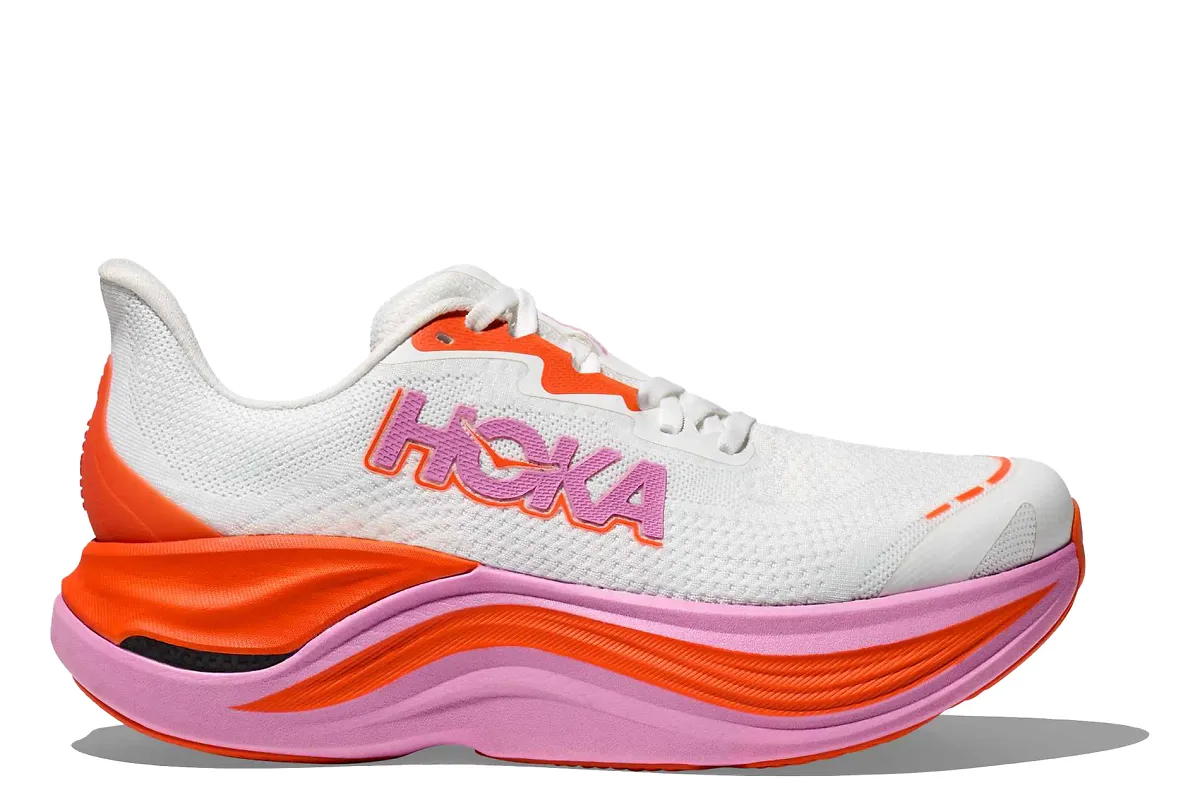
HOKA Skyward X — what reviewers say
Ride profile: maximal cushion , neutral stability .
-
Retrospective: a comfortable cushioned shoe that was too big, too heavy, and too expensive to earn a regular slot in his rotation.
Ride:Comfortable and bouncy in retrospective wear-test, but heavy and clunky enough that Nick never made it a rotation mainstay; even on easy days it felt like 'a lot of shoe' under foot.
-
The biggest, most extreme stack on the list — bulky but really fun, with a plate that lets it pick up the pace better than the other max-stack shoes; a fan favorite of his channel.
Ride:Massive 48mm stack with soft squishy PEBA + supercritical EVA, but the carbon plate adds enough stiffness to keep it stable and bouncy at marathon and half-marathon paces, unlike the squishier-only options on this list. Heaviest shoe Ben has ever tested.
Fit:True to size with good lockdown.
-
A genuine love-hate relationship after 266 miles and a marathon — Steve calls it one of his top 2-3 favorites of 2024 for effortless long miles, but the narrow stiff toe box hurts his feet and the outsole has worn faster than peers at the price point.
Ride:Effortless protection — bounces along on PEBA + EVA + carbon plate without ever feeling the ground. Stiff through the toe box. Best go-to when legs are already beat up. Outsole has worn down faster than competitors at the same mileage on similar terrain.
Fit:Stiff narrow toe box that aggravates bunions and width-sensitive feet — gets slightly wider with break-in but never fully resolves; foot soreness later in the day is a regular tradeoff. Hip wear-and-tear noted from Steve's tendency to supinate in this shoe.
-
An expensive luxury cushion shoe that Ed sold on — the foam is good but the heft makes it strictly a recovery-day option, and even there he prefers the lighter Superblast 2.
Ride:Cushion is nice but the carbon plate dictates a heel-to-toe rocker rather than letting the runner drive the shoe. The 5mm drop felt like an attempt to stabilize a very tall stack — Ed thinks 8mm with less midfoot foam would have made the shoe more aggressive. Far too heavy for him as a lighter-framed runner — strictly a recovery option in his rotation.
Fit:Plush, padded tongue and heel collar; similar forefoot/heel widths to the Superblast 2.
Who should buy which
Use cases the reviewers above actually call out — one bullet per distinct take, attributed. Where reviewers converge (e.g. "5K to half marathon" appearing across multiple takes) the agreement is a stronger buying signal than any single voice.
Consider the ASICS Superblast 2 if
- Marathon trainees wanting one shoe to do everything, including race day and very high-mileage durability. — FORDY RUNS
- Marathon racing, tempo workouts, or higher-mileage days for runners wanting a premium max-cushion performance trainer — Run Moore
- Long runs with some faster work, and easy/recovery miles for neutral runners — Kofuzi
- Half-marathon to marathon training and longer miles at moderate-to-fast paces — FORDY RUNS
- Marathon-focused runners using it as an impact protector on long/slow efforts; heavier runners — EDDBUD
- Long runs and marathon training for fans of firmer rides — FORDY RUNS
Consider the HOKA Skyward X if
- Half/full marathon training when leg protection is the priority — recovery runs and long runs. — EDDBUD
- Marathoners or road-ultra runners who want maximum cushion for long-distance training and racing. — Doctors of Running
- Heavier runners or runners who want max-stack cushion that scales up to half/marathon racing thanks to the plate. — Ben Parkes
- Slow recovery and long-mileage time-on-feet days for runners getting ready for ultra-distance or marathon-distance races. — Run Moore
- Runners who want a tall, plush, controlled cushioned shoe for easy and long runs. — Kofuzi
- Pure long runs and cushy easy runs only — not a versatile trainer. — The Run Testers
Frequently asked questions
What's the difference between the ASICS Superblast 2 and the HOKA Skyward X?
The ASICS Superblast 2 is a daily trainer and the HOKA Skyward X is a long run. By the numbers, the ASICS Superblast 2 weighs 249g, has a 46mm heel stack and an 8mm drop, while the HOKA Skyward X weighs 306g, has a 49mm heel stack and a 5mm drop. The HOKA Skyward X has a curved carbon fiber plate; the ASICS Superblast 2 has none. MSRP is $200 for the ASICS Superblast 2 and $225 for the HOKA Skyward X.
Should I buy the ASICS Superblast 2 or the HOKA Skyward X?
FORDY RUNS on the ASICS Superblast 2: Marathon trainees wanting one shoe to do everything, including race day and very high-mileage durability. EDDBUD on the HOKA Skyward X: Half/full marathon training when leg protection is the priority — recovery runs and long runs.
Per FORDY RUNS, EDDBUD.
Has anyone reviewed both the ASICS Superblast 2 and the HOKA Skyward X?
Yes — EDDBUD, Kofuzi, and Ben Parkes directly compared the ASICS Superblast 2 and the HOKA Skyward X in their reviews.
Per EDDBUD, Kofuzi, Ben Parkes.
Which is lighter, the ASICS Superblast 2 or the HOKA Skyward X?
The ASICS Superblast 2 is lighter, at 249g versus 306g (men's 9) — about 57g less.
Which is more cushioned, the ASICS Superblast 2 or the HOKA Skyward X?
Measured by stack height, the HOKA Skyward X has more underfoot foam — 49mm at the heel versus 46mm.