HOKA Rocket X 3 vs Nike Alphafly 3
A side-by-side comparison grounded in verdicts from 6 reviewers with every source linked. We don't invent quotes; every claim below is attributed.
Specs at a glance
Reviewers who wore both
Direct paired observations — reviewers who actually ran in both of these and wrote the contrast. This is the strongest comparative signal on the page.
Alternative with comparable features to Adios Pro 3 for durability-focused runners
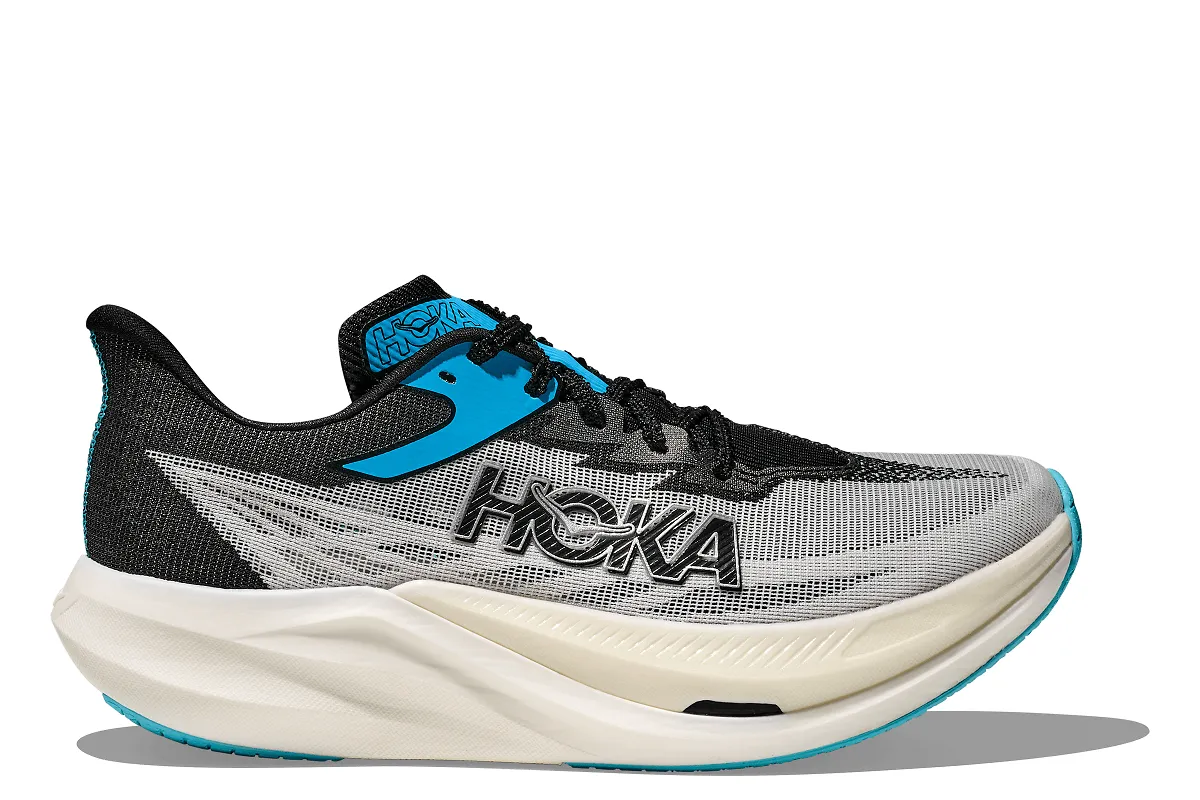
HOKA Rocket X 3 — what reviewers say
Ride profile: high cushion , neutral stability .
-
A stable, budget-friendly race shoe pick, now heavily discounted.
In their words: "nice stable shoe"
-
A stable, no-frills marathon racer that works but that neither reviewer finds especially exciting, and neither would choose it over the Cielo X1 for race day.
Ride:Firmer foam and a carbon plate give more stability than HOKA's other race shoe, with a lightweight, no-frills upper.
In their words: "kind of a no-frills" · "a stable and safe bet"
-
The Rocket X 3 is placed at the bottom of its group, eliminated in the group stage without advancing.
-
Ben Parkes' top Hoka pick; a smooth, stable, and accessible carbon racer suited to 3- to 5-hour marathon runners of all strike types, preferred over the more aggressive Cielo for its comfort and nice rocker geometry.
In their words: "very smooth and stable, however you choose to strike" · "really nice rocker geometry as well, not too aggressive"
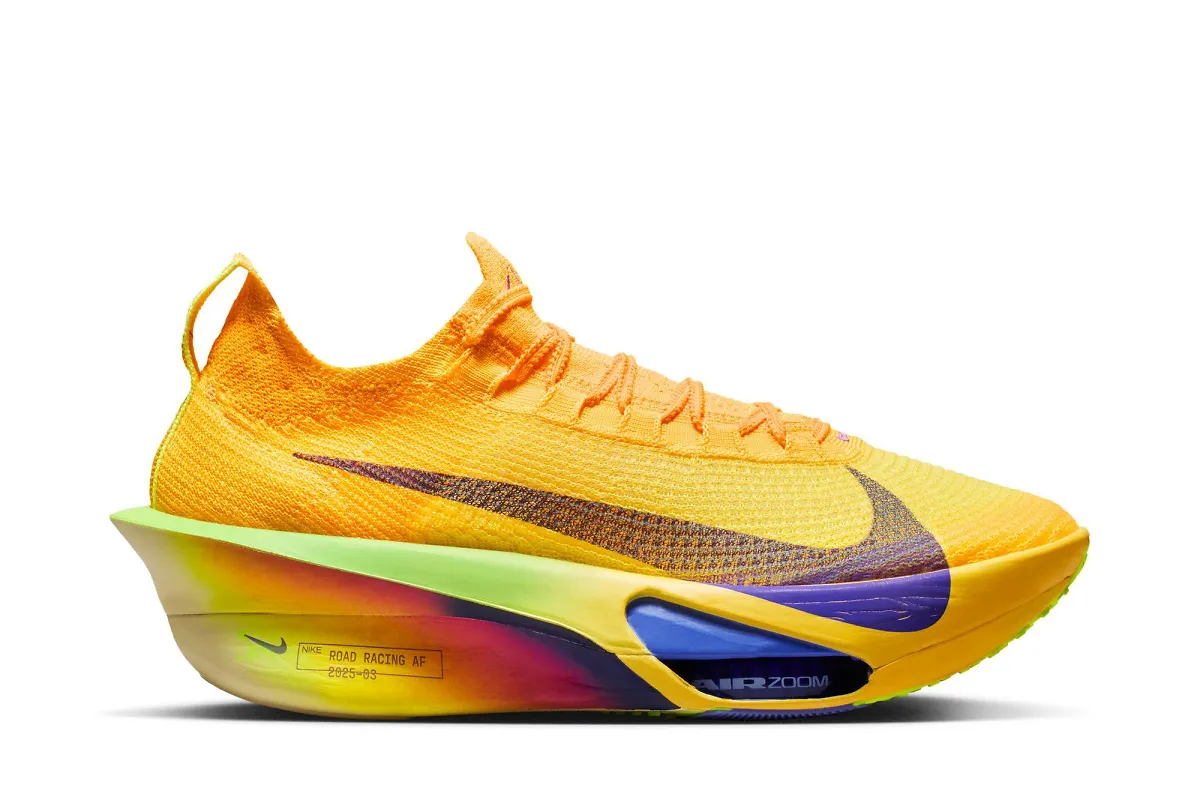
Nike Alphafly 3 — what reviewers say
Ride profile: high cushion , balanced feel , high energy return , neutral stability , moderate rocker.
-
A capable marathon race shoe with a distinctive high-arch fit that may not suit everyone.
In their words: "world's noisiest race day shoe"
-
A durable, solid half/full marathon shoe, though too much shoe for 5K/10K efforts. Tier B.
In their words: "a really solid half or full marathon shoe" · "very resilient foam and air unit combo"
-
Ben's marathon PB shoe — a top super-shoe pick with PEBA foam and carbon plate, offering exceptional protective cushioning for long race distances.
In their words: "ran my personal best in the marathon"
-
The Alphafly 3 is eliminated in the group stage, described as a former great that is aging gracefully but no longer at the top.
In their words: "a former great, aging gracefully, but still not quite getting through"
Who should buy which
Use cases the reviewers above actually call out — one bullet per distinct take, attributed. Where reviewers converge (e.g. "5K to half marathon" appearing across multiple takes) the agreement is a stronger buying signal than any single voice.
Consider the HOKA Rocket X 3 if
- Heel strikers or runners wanting more stability in a race-day shoe, particularly at marathon effort. — Kofuzi
- Road ultra runners who want the efficiency of a carbon shoe but a more reliable, consistent platform than aggressive race shoes. — The Run Testers
- Runners who want a stable, safe-bet carbon racer rather than a more aggressive rockered ride. — Believe in the Run
- Runners wanting a more stable, comfortable carbon racer for marathons or a fast plated trainer that can step up to race day — The Run Testers
- Runners wanting a more approachable, stable and versatile carbon racer for races of any distance including marathon, and fast training. — The Run Testers
- Newcomers to carbon shoes; runners wanting stability in a race shoe — The Run Testers
Consider the Nike Alphafly 3 if
- All-distance racing from 5K up to marathon, especially for heel strikers and anyone wanting a cushier, more accommodating super shoe — The Run Testers
- Marathon racing with leg protection — The Run Testers
- Marathon racing as a single-shoe training-and-racing option; runners who prefer wide, stable, air-unit ride — EDDBUD
- Marathon-distance racing and longer training runs. — EDDBUD
- Elites and runners whose footstrike lines up with the airpod placement. — Kofuzi
- All-distance racing with a particular edge for the marathon, and for runners wanting a more stable, accommodating super shoe — The Run Testers
Frequently asked questions
What's the difference between the HOKA Rocket X 3 and the Nike Alphafly 3?
The HOKA Rocket X 3 is a race shoe and the Nike Alphafly 3 is a race shoe. By the numbers, the HOKA Rocket X 3 weighs 210g, has a 40mm heel stack and a 7mm drop, while the Nike Alphafly 3 weighs 198g, has a 40mm heel stack and an 8mm drop. MSRP is $250 for the HOKA Rocket X 3 and $285 for the Nike Alphafly 3.
Should I buy the HOKA Rocket X 3 or the Nike Alphafly 3?
Kofuzi on the HOKA Rocket X 3: Heel strikers or runners wanting more stability in a race-day shoe, particularly at marathon effort. The Run Testers on the Nike Alphafly 3: All-distance racing from 5K up to marathon, especially for heel strikers and anyone wanting a cushier, more accommodating super shoe.
Per Kofuzi, The Run Testers.
Has anyone reviewed both the HOKA Rocket X 3 and the Nike Alphafly 3?
Yes — RunRepeat directly compared the HOKA Rocket X 3 and the Nike Alphafly 3 in their reviews.
Per RunRepeat.
Which is lighter, the HOKA Rocket X 3 or the Nike Alphafly 3?
The Nike Alphafly 3 is lighter, at 198g versus 210g (men's 9) — about 12g less.
Which is cheaper, the HOKA Rocket X 3 or the Nike Alphafly 3?
The HOKA Rocket X 3 is cheaper at $250 versus $285 MSRP — about $35 less.