HOKA Skyward X vs Hoka Skyward X 2
A side-by-side comparison grounded in verdicts from 7 reviewers with every source linked. We don't invent quotes; every claim below is attributed.
Specs at a glance
Reviewers who wore both
Direct paired observations — reviewers who actually ran in both of these and wrote the contrast. This is the strongest comparative signal on the page.
v2 is ~25g lighter and feels noticeably smoother and nimbler at steady paces while keeping equivalent bounce in the forefoot.
V2 is about a quarter oz lighter, 2mm less stack, snappier, better upper breathability, and no forefoot bunion irritation
v1 was more stabilized and firmer; Hoka was 'afraid to let the foams breathe' — same price ($225)
Version 1 was softer, mushier, heavier and taller; version 2 is firmer, lighter, more stable and more runnable
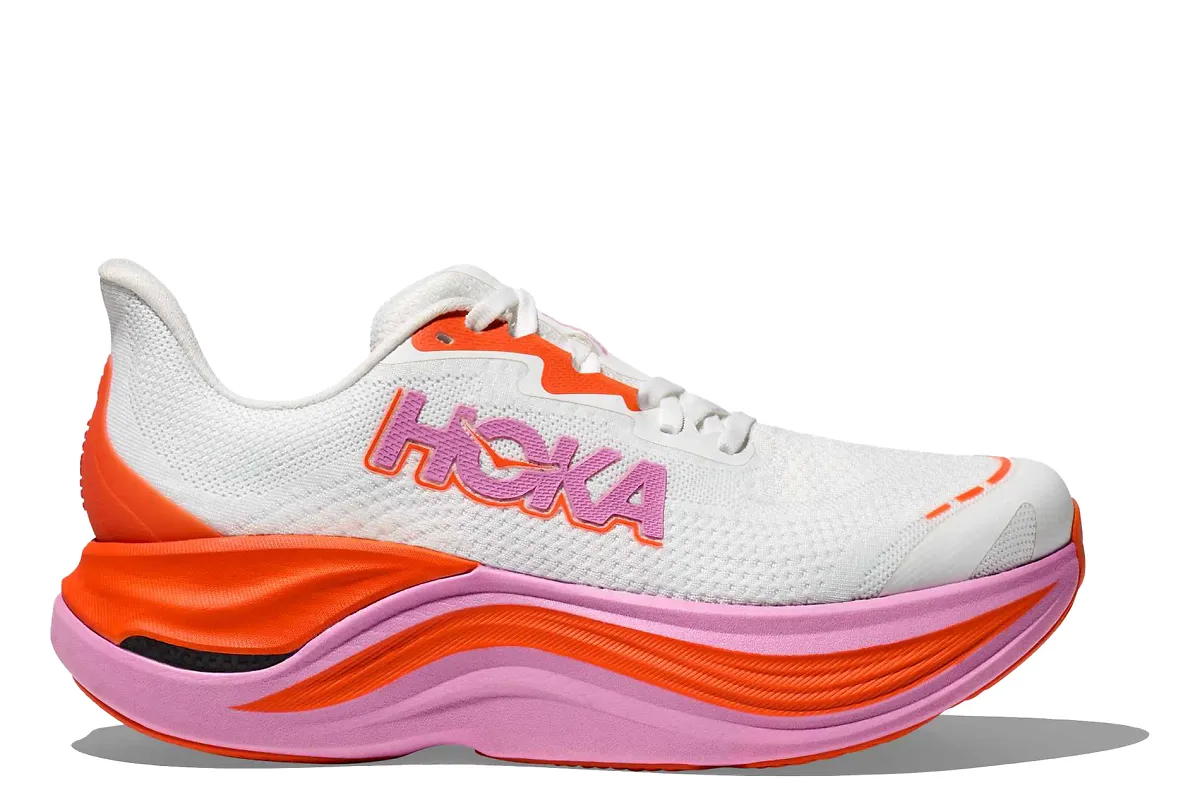
HOKA Skyward X — what reviewers say
Ride profile: maximal cushion , neutral stability .
-
Retrospective: a comfortable cushioned shoe that was too big, too heavy, and too expensive to earn a regular slot in his rotation.
Ride:Comfortable and bouncy in retrospective wear-test, but heavy and clunky enough that Nick never made it a rotation mainstay; even on easy days it felt like 'a lot of shoe' under foot.
-
The biggest, most extreme stack on the list — bulky but really fun, with a plate that lets it pick up the pace better than the other max-stack shoes; a fan favorite of his channel.
Ride:Massive 48mm stack with soft squishy PEBA + supercritical EVA, but the carbon plate adds enough stiffness to keep it stable and bouncy at marathon and half-marathon paces, unlike the squishier-only options on this list. Heaviest shoe Ben has ever tested.
Fit:True to size with good lockdown.
-
A genuine love-hate relationship after 266 miles and a marathon — Steve calls it one of his top 2-3 favorites of 2024 for effortless long miles, but the narrow stiff toe box hurts his feet and the outsole has worn faster than peers at the price point.
Ride:Effortless protection — bounces along on PEBA + EVA + carbon plate without ever feeling the ground. Stiff through the toe box. Best go-to when legs are already beat up. Outsole has worn down faster than competitors at the same mileage on similar terrain.
Fit:Stiff narrow toe box that aggravates bunions and width-sensitive feet — gets slightly wider with break-in but never fully resolves; foot soreness later in the day is a regular tradeoff. Hip wear-and-tear noted from Steve's tendency to supinate in this shoe.
-
An expensive luxury cushion shoe that Ed sold on — the foam is good but the heft makes it strictly a recovery-day option, and even there he prefers the lighter Superblast 2.
Ride:Cushion is nice but the carbon plate dictates a heel-to-toe rocker rather than letting the runner drive the shoe. The 5mm drop felt like an attempt to stabilize a very tall stack — Ed thinks 8mm with less midfoot foam would have made the shoe more aggressive. Far too heavy for him as a lighter-framed runner — strictly a recovery option in his rotation.
Fit:Plush, padded tongue and heel collar; similar forefoot/heel widths to the Superblast 2.
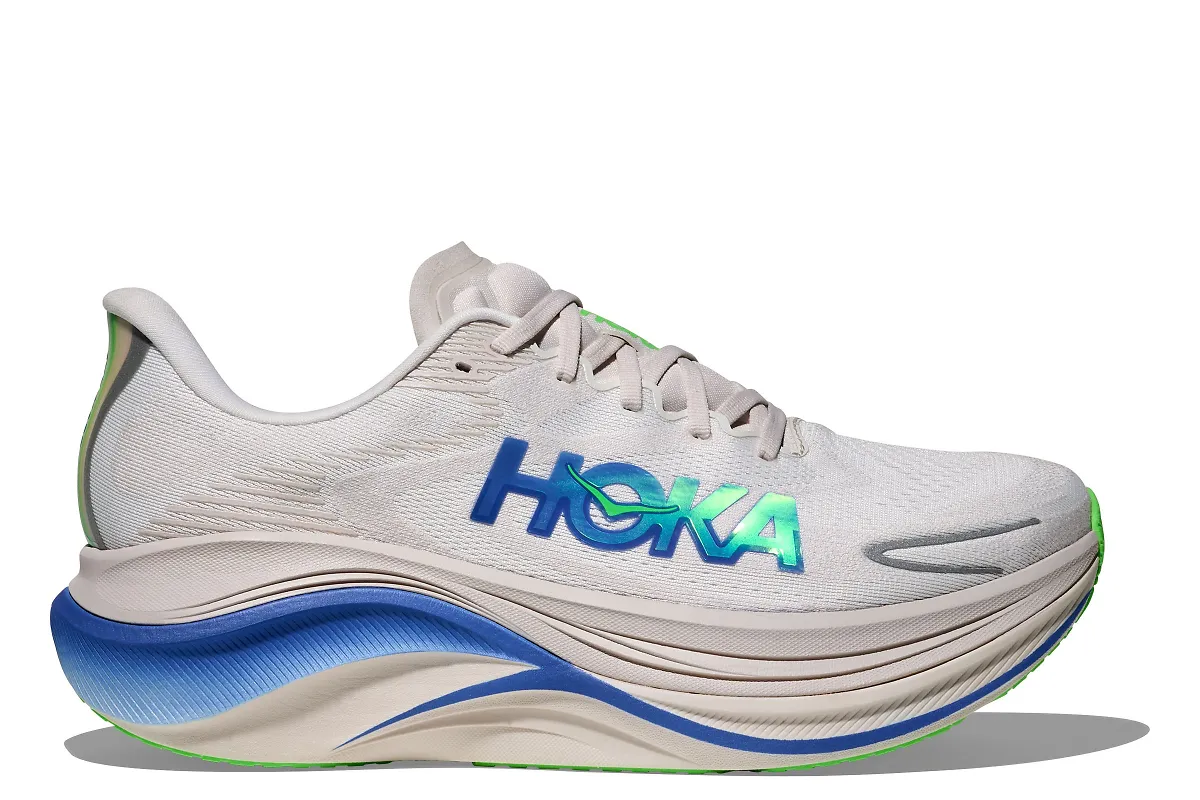
Hoka Skyward X 2 — what reviewers say
Ride profile: maximal cushion , neutral stability .
-
A shoe Fordy feels he 'shouldn't' like on paper but genuinely rates for long runs, especially once pace picks up; likely to be his main road-based option alongside the Hyper 3.
Ride:Big Pebax stack with a carbon plate and dual-foam setup; comfortable but comes alive once pace picks up.
In their words: "a shoe that I shouldn't really like" · "gives me Neo Vista the vibes"
-
A premium, more performance-oriented version of the Bondi that both reviewers pick for recovery runs, versatile enough for long easy runs and the occasional faster effort.
Ride:A plated, premium version of the Bondi with a PEBA top layer over a carbon plate and super critical EVA base; described as a straight-up cruiser with a nice rocker bottom.
In their words: "just honestly more fun" · "treat your legs right"
-
The Skyward X2 is eliminated in the group stage without advancing, with reviewers declining to put it through.
In their words: "I wouldn't put that through"
-
A much-improved version 2 that drops weight and softness for a firmer, more stable and runnable rolling ride; excellent for long runs and ultras but not a fast shoe, and held back by a narrow tapered forefoot.
Ride:Tall, stable-neutral max-cushion ride that is firmer and snappier than expected from this much foam. Two foams: PEBA top over EVA base. Long forefoot rocker and heel bevel produce a rolling, efficient ride rather than a bouncy one. Zero flexibility. Wide platform with tall sidewalls keeps you centered. Foam held up identically over 100 miles.
Fit:Snug fit that tapers and narrows significantly in the forefoot, making the shoe feel slightly short; took 70-80 miles to break in. Caused toe blistering on long runs. Reviewer between 10 and 10.5, considers sizing up a half size though that shifts the rocker apex. Midfoot opens wider and needs the laces locked down. Rounded heel counter that's still very stiff.
In their words: "a really rolling ride" · "really rolls you forward" · "zero zero flexibility to this shoe" · "much better than version one"
Who should buy which
Use cases the reviewers above actually call out — one bullet per distinct take, attributed. Where reviewers converge (e.g. "5K to half marathon" appearing across multiple takes) the agreement is a stronger buying signal than any single voice.
Consider the HOKA Skyward X if
- Half/full marathon training when leg protection is the priority — recovery runs and long runs. — EDDBUD
- Marathoners or road-ultra runners who want maximum cushion for long-distance training and racing. — Doctors of Running
- Heavier runners or runners who want max-stack cushion that scales up to half/marathon racing thanks to the plate. — Ben Parkes
- Slow recovery and long-mileage time-on-feet days for runners getting ready for ultra-distance or marathon-distance races. — Run Moore
- Runners who want a tall, plush, controlled cushioned shoe for easy and long runs. — Kofuzi
- Pure long runs and cushy easy runs only — not a versatile trainer. — The Run Testers
Consider the Hoka Skyward X 2 if
- High-mileage runners looking for a Sunday morning cleanup shoe or ultra back-to-back long run recovery. Not for speed or racing. — Run Moore
- Long-run hammering at consistent paces for runners with mild-to-moderate stability needs who want a super-foam ride — Doctors of Running
- Long runs and recovery runs, with enough versatility to pick up the pace occasionally; both hosts pick it as their recovery-day shoe. — Believe in the Run
- Easy miles, recovery, and long cruiser runs for runners who want max cushion without the bulk of v1. — Believe in the Run
- Runners who like the Bondi 9 character but want it more energetic, softer, and bouncier — premium max-cushion for easy days, long runs, and recovery. — Kofuzi
- Long runs and ultramarathons on the road, plus easy/recovery/daily miles for runners who want a lot of foam; a potential marathon shoe for 3:30-4:00 runners — Doctors of Running
Frequently asked questions
What's the difference between the HOKA Skyward X and the Hoka Skyward X 2?
The HOKA Skyward X is a long run and the Hoka Skyward X 2 is a recovery / easy. By the numbers, the HOKA Skyward X weighs 306g, has a 49mm heel stack and a 5mm drop, while the Hoka Skyward X 2 weighs 283g, has a 49mm heel stack and a 5mm drop. MSRP is $225 for the HOKA Skyward X and $225 for the Hoka Skyward X 2.
Should I buy the HOKA Skyward X or the Hoka Skyward X 2?
EDDBUD on the HOKA Skyward X: Half/full marathon training when leg protection is the priority — recovery runs and long runs. Run Moore on the Hoka Skyward X 2: High-mileage runners looking for a Sunday morning cleanup shoe or ultra back-to-back long run recovery. Not for speed or racing.
Per EDDBUD, Run Moore.
Has anyone reviewed both the HOKA Skyward X and the Hoka Skyward X 2?
Yes — The Run Testers, Run Moore, Kofuzi, and Doctors of Running directly compared the HOKA Skyward X and the Hoka Skyward X 2 in their reviews.
Per The Run Testers, Run Moore, Kofuzi, Doctors of Running.
Which is lighter, the HOKA Skyward X or the Hoka Skyward X 2?
The Hoka Skyward X 2 is lighter, at 283g versus 306g (men's 9) — about 23g less.