Mizuno Wave Rider 30 vs Nike Pegasus 42
A side-by-side comparison grounded in verdicts from 5 reviewers with every source linked. We don't invent quotes; every claim below is attributed.
Specs at a glance
Reviewers who wore both
Direct paired observations — reviewers who actually ran in both of these and wrote the contrast. This is the strongest comparative signal on the page.
Wave Rider 30 offers more tech, better foam, more stack, and less weight for a similar or lower price
Wave Rider 30 seen as more comfortable and lively than the flatter-riding, heavier Pegasus
Wave Rider 30 offers a much superior ride
Less firm and stable than the Pegasus, more softness-focused
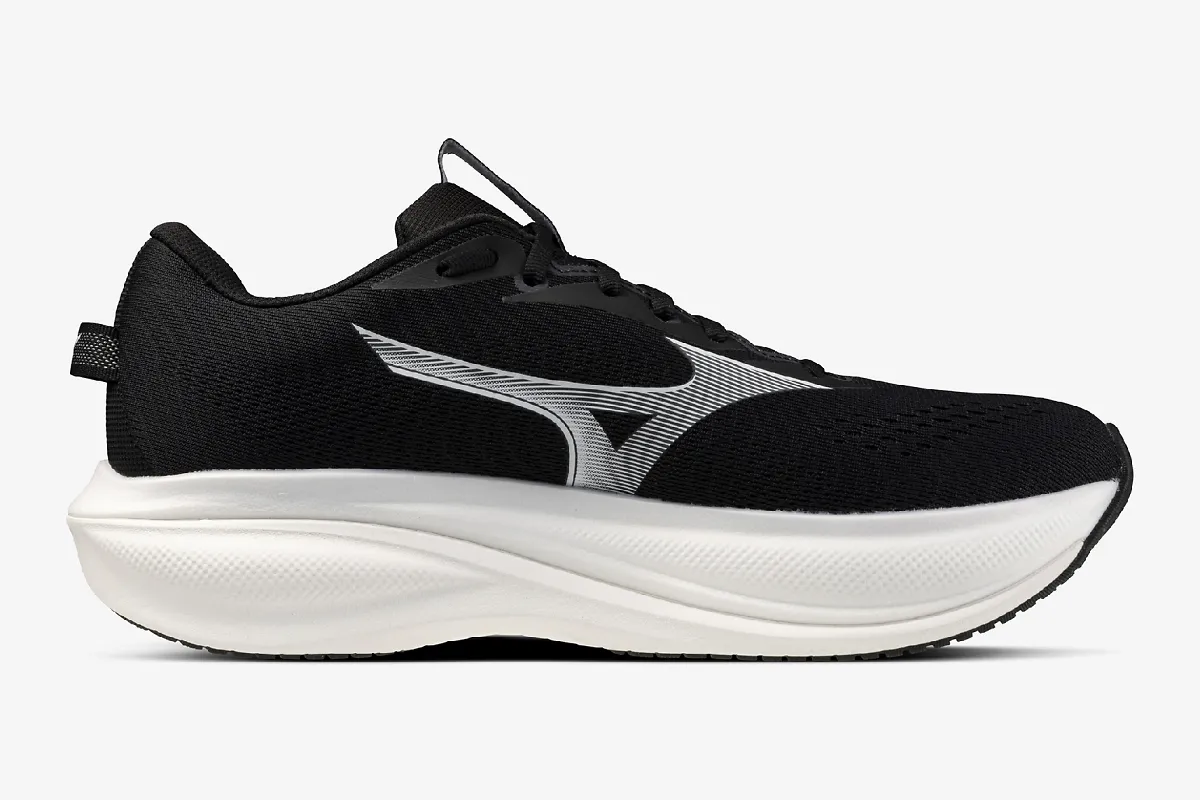
Mizuno Wave Rider 30 — what reviewers say
Ride profile: maximal cushion , neutral stability .
-
A standout, pleasantly-surprising update the whole panel praised for combining a much softer, bouncier midsole with retained Wave Rider responsiveness; advanced to the bracket quarterfinal before losing narrowly to the eventual champion Clifton 11.
Ride:Described as a major update: much softer supercritical EVA midsole than the traditionally firm Wave Rider, drop reduced to 8mm, full-length flexible wave plate. Handled a track workout (8x100 at fast pace) well. Praised as a snappy, versatile daily trainer that also advanced deep into the bracket, beating the Puma Velocity Nitro 5 before losing a close quarterfinal to the eventual champion Clifton 11.
In their words: "really pleasant surprise" · "it just turned over so nice"
-
Both testers found the Wave Rider 30 a comfortable, stable, and surprisingly modern update that excels at easy-to-steady daily miles, but they felt it lacks versatility and top-end pop, ranking it just behind the ASICS Novablast 6 in this category.
Ride:Soft, protective, high-stack cushioning that feels cradled but still connected; stable despite the tall stack thanks to a wide base, with a smooth but minimally rockered transition and only moderate energy return that fades at faster paces.
Fit:True to size for most, with a generously roomy toe box and secure midfoot/heel lockdown; the thick padded upper can run a little warm in hot weather.
In their words: "solid easy mid-pace comfort cruiser" · "Assistive not aggressive" · "cradled but still connected"
-
A well-built, high-stack daily trainer that delivers a smooth, stable ride at a strong value price, though a touch on the heavy side; EDDBUD scores it 10.8/12 and considers it a competitive option against pricier alternatives.
Ride:Stable ride thanks to the denser EVA base and wave plate; Enerzy Next top layer adds some bounce; smooth rolling transition favoring heel-to-toe cadence runners; works better at easier/steady paces than fast efforts
Fit:Nice lockdown with a comfortably wide toe box but not overly generous; suits narrow to normal width feet; no lace bite with runner's knot
In their words: "just sliding through the butter" · "hints of the Boston 13 in this one" · "a very well-priced daily trainer"
-
Mizuno completely reimagined the Wave Rider for its 30th anniversary, delivering a plush, bouncy, and versatile daily trainer that punches well above its $150 price point. Both reviewers gave it an overall A, praising the meaningful midsole and upper updates and the surprisingly lively ride from an EVA-based construction.
Ride:Dual-density EVA midsole with full-length plastic wave plate delivers a surprisingly bouncy and energetic ride; 42.5mm heel / 34.5mm forefoot stack; versatile enough for easy days and picking up the pace; not aggressive enough for tempo or race efforts; comfortable for casual walking
Fit:Fits true to size; plush padded upper with well-padded tongue and collar; feels snug for wider feet but well-dialed for standard widths; laces provide good lockdown
In their words: "a tamed down version of the Neo Vista" · "I haven't had a bad run in this yet" · "fun and exciting ride"
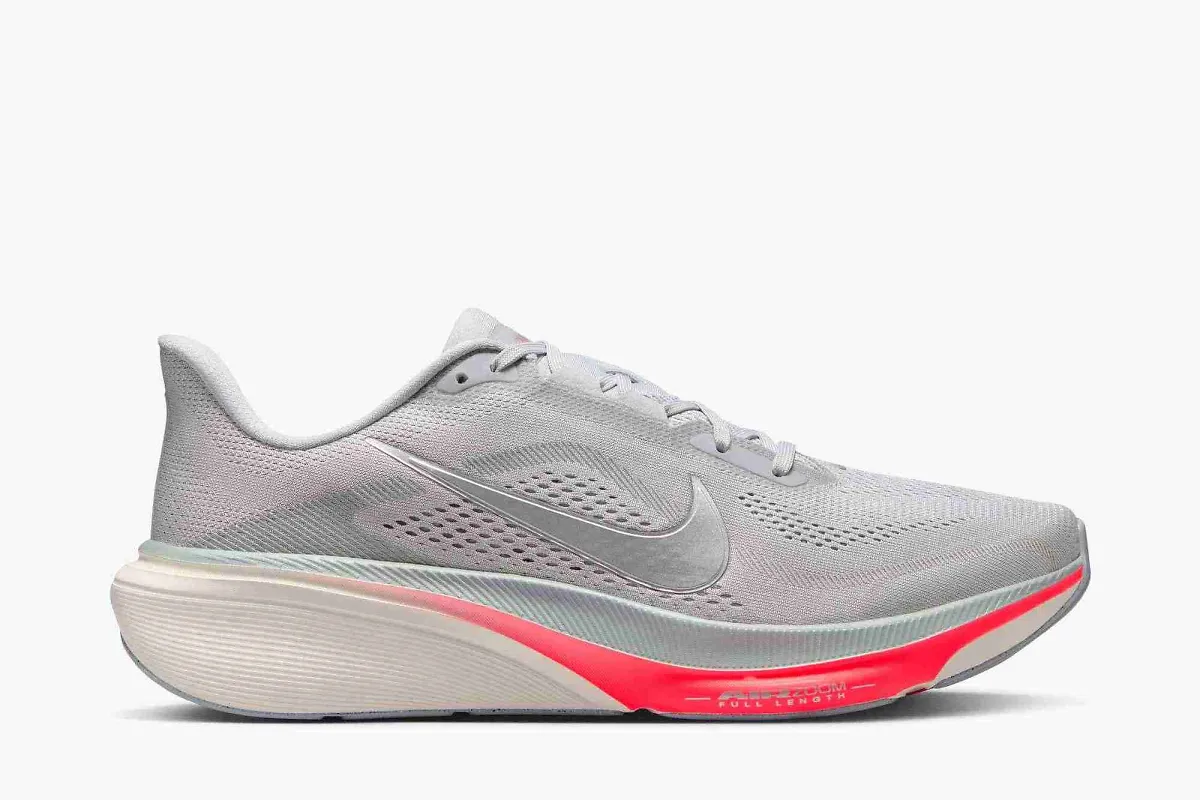
Nike Pegasus 42 — what reviewers say
Ride profile: medium cushion , firm_responsive feel , moderate energy return , neutral stability , moderate rocker.
-
Lost round one to the Adidas Supernova Rise 3, 2-1; opinions were split, with one panelist's critique based on the prior-generation Pegasus 41 rather than the 42 itself.
Ride:One panelist praised its versatility for runners with neutral mechanics; another had not yet run the 42 specifically and based his skepticism on a disappointing experience with the Pegasus 41.
Fit:Fit described as narrow but locking down well; one panelist said it 'feels fast.'
In their words: "just feels fast"
-
Nick calls this an easy loss to the Novablast 6 for pure running performance — comfortable at the heel and very durable, but firm, thin in the forefoot, and 'dull' at faster paces — though he still rates it highly for gym/crossover/general use.
Ride:A traditional, higher-drop, lower-stack ride that's comfortable at easy paces and under the heel, but feels cumbersome and can cause forefoot discomfort on longer runs; heavier and less versatile than the Novablast 6 despite the lower stack.
Fit:True to size with good room around the toes and secure heel/midfoot hold; runs a bit warm due to heavy padding.
In their words: "can feel a bit dull at times" · "feels a little bit cumbersome" · "It will last forever"
-
EDDBUD finds the Pegasus 42 an adequate but stagnant daily trainer that hasn't meaningfully evolved in years.
Ride:Typical air units with a more modest, firm carrier foam; okay for easy or daily activities but hasn't moved on much in 6-7 years
In their words: "it isn't really a shoe that's moved on all that much over the last 6 or 7 years"
-
An incremental improvement over the Pegasus 41 with a new full-length Air Zoom unit and wider toe box, but the dead ReactX foam and 311g weight leave it outclassed by competitors in the same price range.
Ride:Improved forefoot feel vs the Pegasus 41 thanks to increased toe spring and a full-length curved Air Zoom unit acting like a plate, but the ReactX foam is lifeless and heavy
Fit:True to size with a wider toe box than the previous version, providing inherent stability
In their words: "the ReactX foam in here is boring" · "too heavy for a daily trainer" · "more width in this toe box"
Who should buy which
Use cases the reviewers above actually call out — one bullet per distinct take, attributed. Where reviewers converge (e.g. "5K to half marathon" appearing across multiple takes) the agreement is a stronger buying signal than any single voice.
Consider the Mizuno Wave Rider 30 if
- Daily training and recovery runs for neutral to mild-stability runners seeking a premium everyday shoe — Believe in the Run
- Cadence runners or heavier runners wanting a high-stack daily trainer that won't bottom out; those seeking a more conservative, traditional daily shoe — EDDBUD
- Runners looking for a stable yet bouncy daily trainer, especially those with wide feet — Ben Is Running
- Easy and steady daily mileage for runners who want comfort and stability over speed, including beginners or casual-mileage runners. — The Run Testers
- Daily training and workouts for runners wanting a well-cushioned, versatile trainer that can still turn over. — Doctors of Running
- Neutral runners wanting a higher drop daily trainer with a soft, rockered, and fluid ride — Doctors of Running
Consider the Nike Pegasus 42 if
- Daily training miles and a do-it-all workhorse for runners who want one shoe for running and gym use. — Believe in the Run
- Fans of the Pegasus 41 who want a versatile do-it-all daily shoe — FORDY RUNS
- Pegasus stalwarts who want a structured, mild-stability daily trainer for easy miles, walking, or all-day wear — EDDBUD
- General daily training and easy runs for traditional runners who prefer a higher-drop, close-to-ground, firm feel; also functional for walking and gym use — The Run Testers
- General/crossover use — easy runs, gym training, and walking — for runners who value durability and a traditional ride over versatility. — The Run Testers
- Easy daily miles and walking for heel strikers who want a familiar comfortable ride — The Run Testers
Frequently asked questions
What's the difference between the Mizuno Wave Rider 30 and the Nike Pegasus 42?
The Mizuno Wave Rider 30 is a daily trainer and the Nike Pegasus 42 is a daily trainer. By the numbers, the Mizuno Wave Rider 30 weighs 264g, has a 44mm heel stack and an 8mm drop, while the Nike Pegasus 42 weighs 292g, has a 38mm heel stack and a 10mm drop. The Mizuno Wave Rider 30 has a MIZUNO WAVE plate (PEBAX RNEW, plant-based TPU); the Nike Pegasus 42 has none. MSRP is $150 for the Mizuno Wave Rider 30 and $145 for the Nike Pegasus 42.
Should I buy the Mizuno Wave Rider 30 or the Nike Pegasus 42?
Believe in the Run on the Mizuno Wave Rider 30: Daily training and recovery runs for neutral to mild-stability runners seeking a premium everyday shoe. Believe in the Run on the Nike Pegasus 42: Daily training miles and a do-it-all workhorse for runners who want one shoe for running and gym use.
Per Believe in the Run.
Has anyone reviewed both the Mizuno Wave Rider 30 and the Nike Pegasus 42?
Yes — EDDBUD, The Run Testers, and FORDY RUNS directly compared the Mizuno Wave Rider 30 and the Nike Pegasus 42 in their reviews.
Per EDDBUD, The Run Testers, FORDY RUNS.
Which is lighter, the Mizuno Wave Rider 30 or the Nike Pegasus 42?
The Mizuno Wave Rider 30 is lighter, at 264g versus 292g (men's 9) — about 28g less.
Which is more cushioned, the Mizuno Wave Rider 30 or the Nike Pegasus 42?
Measured by stack height, the Mizuno Wave Rider 30 has more underfoot foam — 44mm at the heel versus 38mm.