Nike Alphafly 3 vs Adidas Adizero Adios Pro 4
A side-by-side comparison grounded in verdicts from 5 reviewers with every source linked. We don't invent quotes; every claim below is attributed.
Specs at a glance
Reviewers who wore both
Direct paired observations — reviewers who actually ran in both of these and wrote the contrast. This is the strongest comparative signal on the page.
Similar stack and drop, but Alphafly 3 has a wider heel and costs far more; not clearly better enough to justify the price gap over the Adios Pro 4
Adios Pro 3 has the best super-shoe outsole durability thanks to Continental rubber
Alphafly has a broader, more stable feel with a softer heel into firmer forefoot, better for cruising at marathon pace than the nimbler Adios Pro 4
Less comfortable transition than the Adidas
More comfortable transition than the Alphafly for this reviewer
Alphafly 3 has a more plush upper and more stability and cushion in the heel thanks to a flatter plate placement; considered the king in cushion/stability/comfort but much more expensive and harder to get
Similar stack and drop, but Adios Pro 4 is much narrower in the heel and significantly cheaper; Alphafly 3 is slightly more aggressive on traction but Adios Pro 4 is competitive enough that it may take the marathon slot
Alphafly 3 fit is more generous, almost baggy, with harsh knit edges. Zoom Air pods feel clunky, noisy, and rickety compared to the smoother Pro 4, but it remains an extremely efficient set-and-forget marathon racer — only 0.2 oz heavier at 7.4 oz.
Adios Pro 4 is lighter, nimbler and a bit more springy throughout, cheaper, and slightly preferred at harder efforts, while the Alphafly has a more relaxed cruising feel better for locking into marathon pace
One of two shoes he is choosing between for Manchester Marathon
More comfortable with carbon rods instead of a plate; more movement
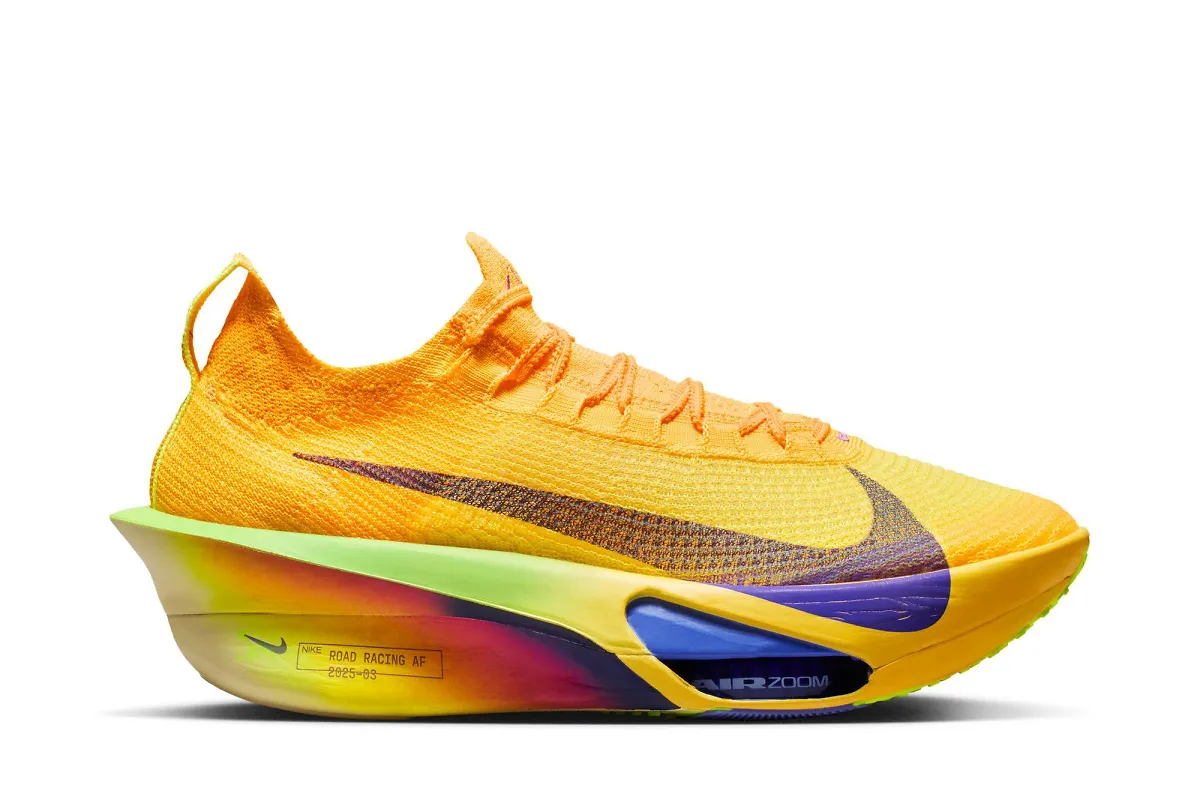
Nike Alphafly 3 — what reviewers say
Ride profile: high cushion , balanced feel , high energy return , neutral stability , moderate rocker.
-
A capable marathon race shoe with a distinctive high-arch fit that may not suit everyone.
In their words: "world's noisiest race day shoe"
-
A durable, solid half/full marathon shoe, though too much shoe for 5K/10K efforts. Tier B.
In their words: "a really solid half or full marathon shoe" · "very resilient foam and air unit combo"
-
Ben's marathon PB shoe — a top super-shoe pick with PEBA foam and carbon plate, offering exceptional protective cushioning for long race distances.
In their words: "ran my personal best in the marathon"
-
The Alphafly 3 is eliminated in the group stage, described as a former great that is aging gracefully but no longer at the top.
In their words: "a former great, aging gracefully, but still not quite getting through"
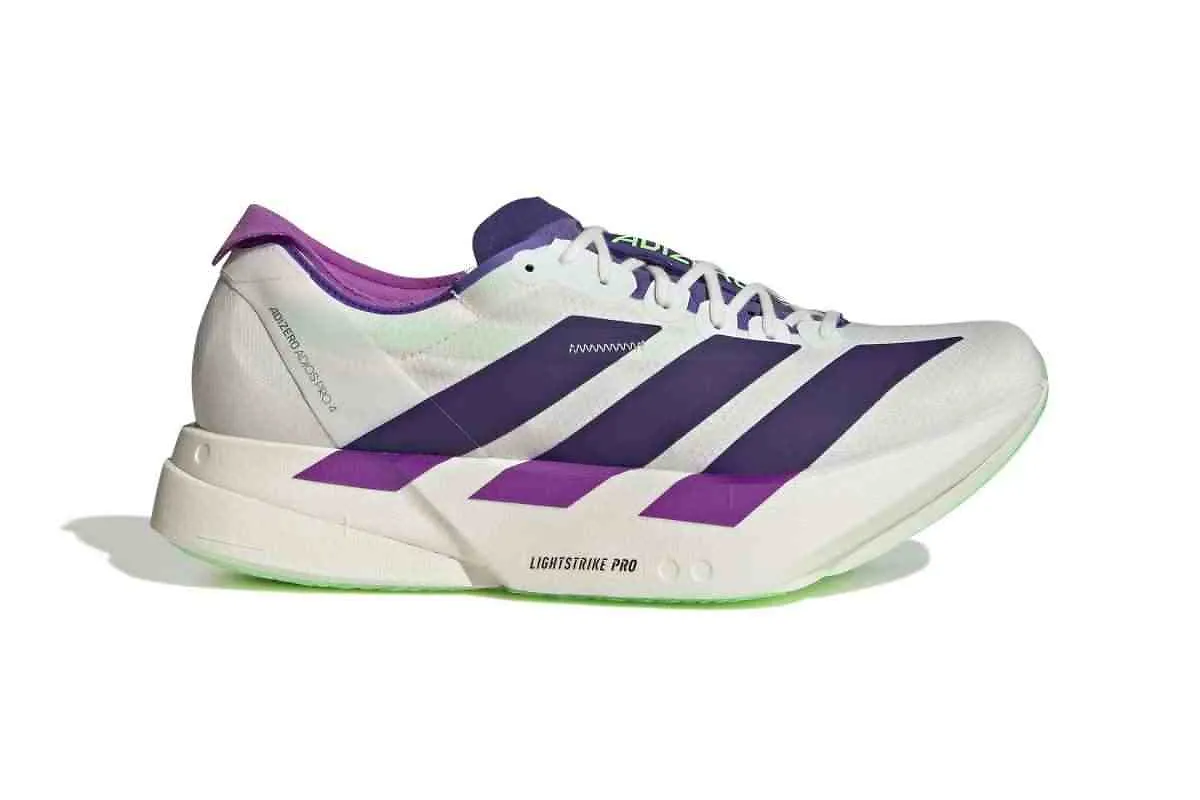
Adidas Adizero Adios Pro 4 — what reviewers say
Ride profile: high cushion , neutral stability .
-
A strong marathon race shoe once fit is dialed in — the reviewer used it successfully at Chicago Marathon after making tweaks.
Fit:Required some personal tweaks to dial in before it worked well for this reviewer.
In their words: "worked out perfectly well"
-
Works well for half/full marathon but too soft for shorter, faster distances, loses pep quickly, and its softer Lightstrike Pro foam is linked to rod-snapping issues. Tier C.
In their words: "went a bit flat even quicker than Man City" · "just a few too many issues"
-
Ben Parkes calls this probably the best-value super shoe on the market, lightweight and fast, and a strong marathon race-day option.
Ride:Reviewer describes carbon rods (rather than a single plate) giving a similar propulsive effect.
In their words: "probably the best value super shoe" · "Lightweight, fast, used by so many"
-
The most comfortable of Ben's three race day picks — carbon rods instead of a plate allow more natural movement, making it an excellent choice for longer race distances.
In their words: "most comfortable for me" · "can move a little bit more"
Who should buy which
Use cases the reviewers above actually call out — one bullet per distinct take, attributed. Where reviewers converge (e.g. "5K to half marathon" appearing across multiple takes) the agreement is a stronger buying signal than any single voice.
Consider the Nike Alphafly 3 if
- All-distance racing from 5K up to marathon, especially for heel strikers and anyone wanting a cushier, more accommodating super shoe — The Run Testers
- Marathon racing with leg protection — The Run Testers
- Marathon racing as a single-shoe training-and-racing option; runners who prefer wide, stable, air-unit ride — EDDBUD
- Marathon-distance racing and longer training runs. — EDDBUD
- Elites and runners whose footstrike lines up with the airpod placement. — Kofuzi
- All-distance racing with a particular edge for the marathon, and for runners wanting a more stable, accommodating super shoe — The Run Testers
Consider the Adidas Adizero Adios Pro 4 if
- A marathon race-day shoe, also suited to 5K, 10K, and half marathon distances; good value since it's been out a couple of years. — Ben Parkes
- Any distance from short reps to marathon racing — The Run Testers
- Marathon racing; verdict deferred to 2025 list. — Kofuzi
- Marathon racing where bounce and pop matter most — The Running Channel
- The most versatile super shoe in the test — 5K through marathon. EDDBUD's overall winner at 19/25. — EDDBUD
- Runners targeting marathon or longer who want cushioned protection and are comfortable with the fit; recommended for those running slower than sub-3 marathon pace — The Run Testers
Frequently asked questions
What's the difference between the Nike Alphafly 3 and the Adidas Adizero Adios Pro 4?
The Nike Alphafly 3 is a race shoe and the Adidas Adizero Adios Pro 4 is a race shoe. By the numbers, the Nike Alphafly 3 weighs 198g, has a 40mm heel stack and an 8mm drop, while the Adidas Adizero Adios Pro 4 weighs 201g, has a 39mm heel stack and a 6mm drop. MSRP is $285 for the Nike Alphafly 3 and $220 for the Adidas Adizero Adios Pro 4.
Should I buy the Nike Alphafly 3 or the Adidas Adizero Adios Pro 4?
The Run Testers on the Nike Alphafly 3: All-distance racing from 5K up to marathon, especially for heel strikers and anyone wanting a cushier, more accommodating super shoe. Ben Parkes on the Adidas Adizero Adios Pro 4: A marathon race-day shoe, also suited to 5K, 10K, and half marathon distances; good value since it's been out a couple of years.
Per The Run Testers, Ben Parkes.
Has anyone reviewed both the Nike Alphafly 3 and the Adidas Adizero Adios Pro 4?
Yes — EDDBUD, RunRepeat, The Run Testers, The Running Channel, Kofuzi, and Ben Is Running directly compared the Nike Alphafly 3 and the Adidas Adizero Adios Pro 4 in their reviews.
Per EDDBUD, RunRepeat, The Run Testers, The Running Channel, Kofuzi, Ben Is Running.
Which is cheaper, the Nike Alphafly 3 or the Adidas Adizero Adios Pro 4?
The Adidas Adizero Adios Pro 4 is cheaper at $220 versus $285 MSRP — about $65 less.