Nike Alphafly 3 vs ASICS Metaspeed Sky/Edge Tokyo
A side-by-side comparison grounded in verdicts from 5 reviewers with every source linked. We don't invent quotes; every claim below is attributed.
Specs at a glance
Reviewers who wore both
Direct paired observations — reviewers who actually ran in both of these and wrote the contrast. This is the strongest comparative signal on the page.
Heavier, cushier, and more expensive. Provides more protection for longer distances and heavier runners but feels less nippy and responsive. The ZoomX foam has fallen behind ASICS's newer FF Leap technology.
Lighter, more responsive, faster transition, and cheaper than the Alphafly 3. The ASICS feels more like a part of the foot with quicker turnover. The Alphafly offers more cushioning and protection at the heel but the Metaspeed Sky Tokyo's foam technology has surpassed ZoomX.
Heel feel on the Sky Tokyo is reminiscent of the trampoline-like landing of the Alphafly.
Alphafly would be more cushioned at the back and potentially better for courses with lots of downhill
Sky's bouncy heel-and-midfoot with firmer forefoot feel is reminiscent of the Alphafly, though they remain distinct shoes.
Alphafly 3 is heavier with ZoomX foam and Zoom Air pods, offering a more mechanical-assist feel; similar plate geometry and forefoot-striker bias; retails at $295
The Alphafly 3 is more comfortable and supportive for a carbon shoe but heavier. The Sky Tokyo is preferred for its lighter feel and more responsive plate engagement in the forefoot.
Better option for wider-footed runners due to more consistent footbed.
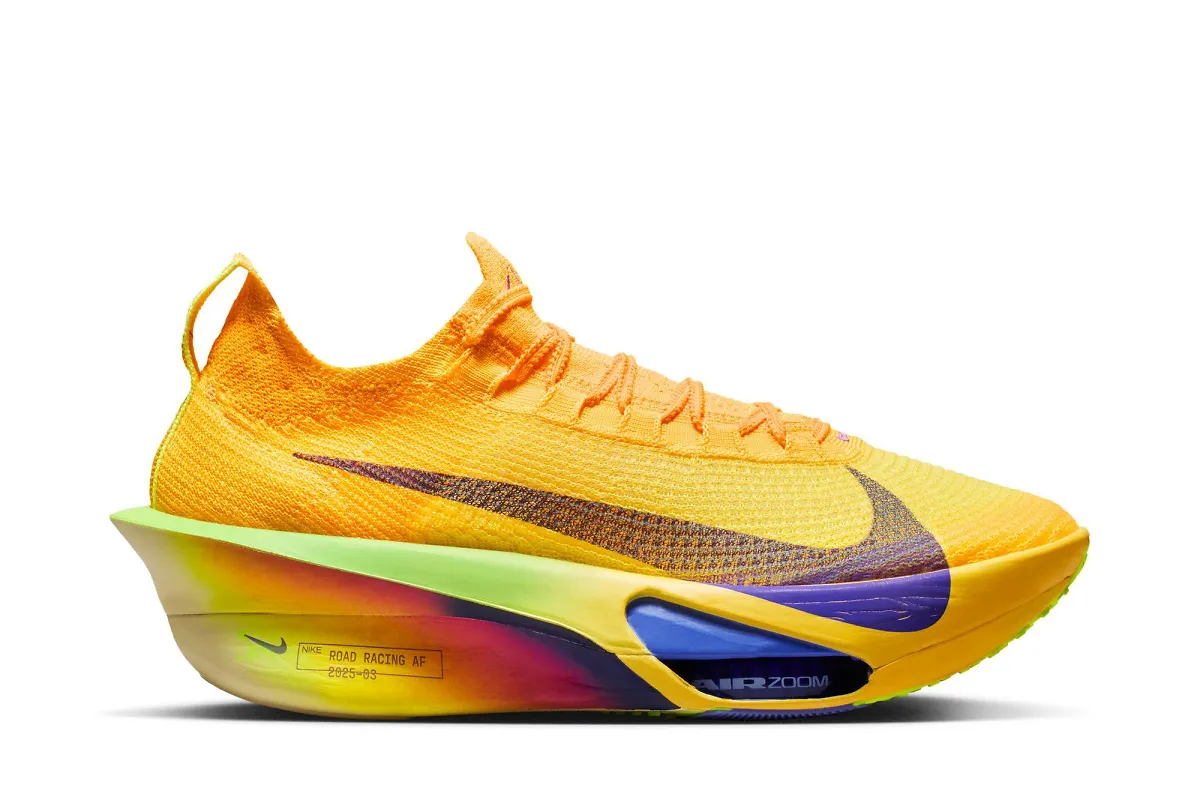
Nike Alphafly 3 — what reviewers say
Ride profile: high cushion , balanced feel , high energy return , neutral stability , moderate rocker.
-
A capable marathon race shoe with a distinctive high-arch fit that may not suit everyone.
In their words: "world's noisiest race day shoe"
-
A durable, solid half/full marathon shoe, though too much shoe for 5K/10K efforts. Tier B.
In their words: "a really solid half or full marathon shoe" · "very resilient foam and air unit combo"
-
Ben's marathon PB shoe — a top super-shoe pick with PEBA foam and carbon plate, offering exceptional protective cushioning for long race distances.
In their words: "ran my personal best in the marathon"
-
The Alphafly 3 is eliminated in the group stage, described as a former great that is aging gracefully but no longer at the top.
In their words: "a former great, aging gracefully, but still not quite getting through"
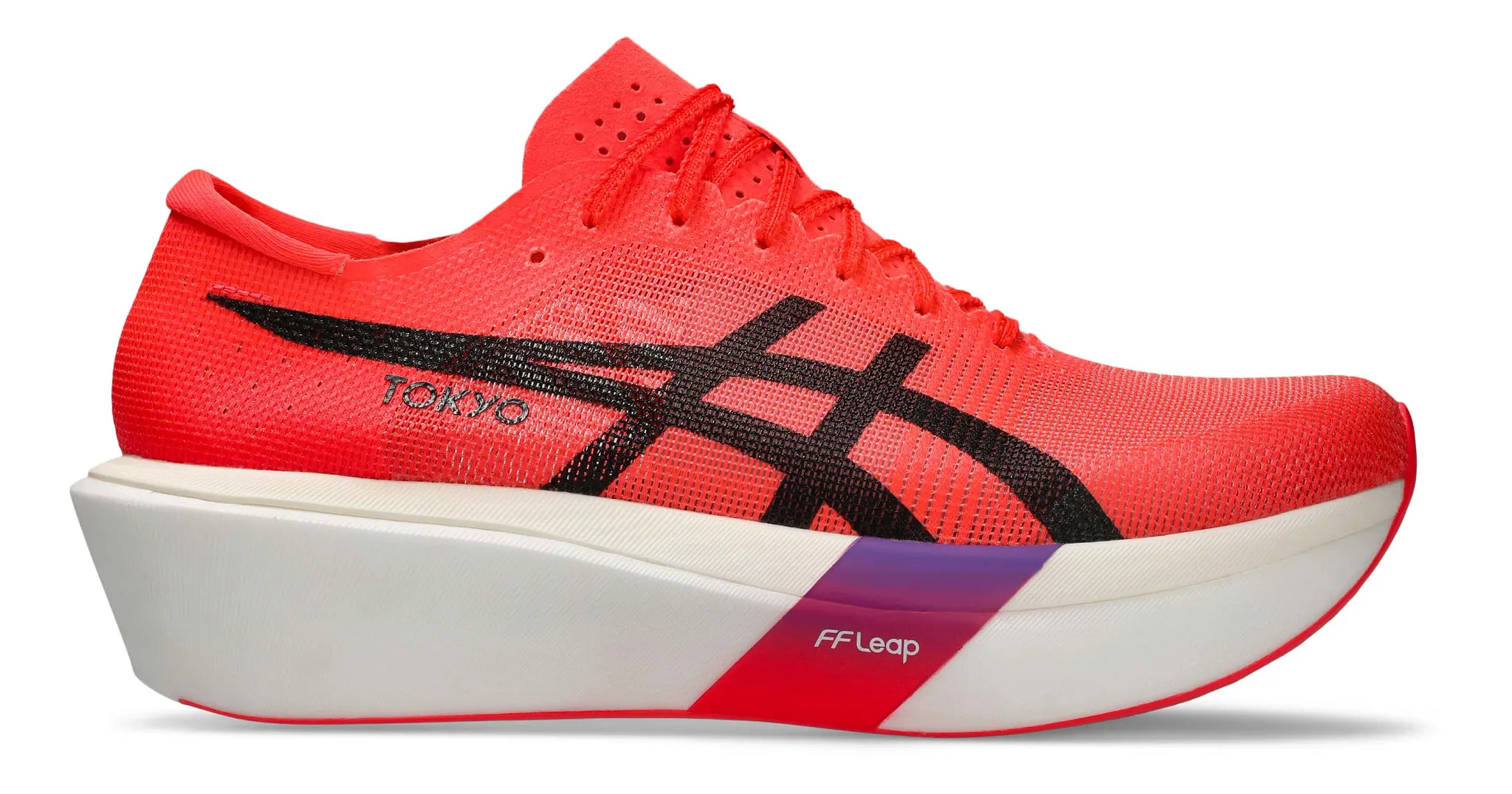
ASICS Metaspeed Sky/Edge Tokyo — what reviewers say
Ride profile: maximal cushion , neutral stability .
-
A popular, versatile race shoe that works well for most runners, though this reviewer personally struggles with blistering in it.
Fit:This reviewer personally gets blistering in this shoe due to its setup, despite generally getting on well with other ASICS shoes.
In their words: "a bit of a bargain"
-
Ran a 2:24 marathon at Loch Ness in the Sky Tokyo; the dual-density FF Leap/Turbo Plus midsole and high forefoot plate give a very bouncy ride he rates just behind the Fast-R Nitro Elite 3.
In their words: "really bouncy shoe" · "a lot of spring"
-
A great marathon-paced racer, though the softer midsole and flatter plate feel less versatile across paces than the previous Sky, with foam durability a slight concern. Tier B.
In their words: "a great shoe, though very much anchored in marathon pace" · "the foam does really take a beating"
-
A very fast, lightweight racing shoe the reviewer uses for shorter race distances (5K/10K), while preferring the Edge for half marathon and marathon.
In their words: "extremely fast and very lightweight"
Who should buy which
Use cases the reviewers above actually call out — one bullet per distinct take, attributed. Where reviewers converge (e.g. "5K to half marathon" appearing across multiple takes) the agreement is a stronger buying signal than any single voice.
Consider the Nike Alphafly 3 if
- All-distance racing from 5K up to marathon, especially for heel strikers and anyone wanting a cushier, more accommodating super shoe — The Run Testers
- Marathon racing with leg protection — The Run Testers
- Marathon racing as a single-shoe training-and-racing option; runners who prefer wide, stable, air-unit ride — EDDBUD
- Marathon-distance racing and longer training runs. — EDDBUD
- Elites and runners whose footstrike lines up with the airpod placement. — Kofuzi
- All-distance racing with a particular edge for the marathon, and for runners wanting a more stable, accommodating super shoe — The Run Testers
Consider the ASICS Metaspeed Sky/Edge Tokyo if
- A versatile, lightweight race shoe for a range of distances, including marathons. — Ben Parkes
- 5K, 10K, and half marathon racing — particularly when going at top speed and striding out for a PB attempt — FORDY RUNS
- Racing from 5K up to the marathon — The Run Testers
- Races from 5K to marathon for runners who prefer a light, responsive, and poppy carbon plate shoe — The Run Testers
- Marathon racing and any distance where a softer, bouncier carbon-plated feel is preferred, especially on undulating courses. — The Run Testers
- Lighter runners who can maintain form over long races — EDDBUD
Frequently asked questions
What's the difference between the Nike Alphafly 3 and the ASICS Metaspeed Sky/Edge Tokyo?
The Nike Alphafly 3 is a race shoe and the ASICS Metaspeed Sky/Edge Tokyo is a race shoe. By the numbers, the Nike Alphafly 3 weighs 198g, has a 40mm heel stack and an 8mm drop, while the ASICS Metaspeed Sky/Edge Tokyo weighs 159g, has a 40mm heel stack and a 5mm drop. MSRP is $285 for the Nike Alphafly 3 and $270 for the ASICS Metaspeed Sky/Edge Tokyo.
Should I buy the Nike Alphafly 3 or the ASICS Metaspeed Sky/Edge Tokyo?
The Run Testers on the Nike Alphafly 3: All-distance racing from 5K up to marathon, especially for heel strikers and anyone wanting a cushier, more accommodating super shoe. Ben Parkes on the ASICS Metaspeed Sky/Edge Tokyo: A versatile, lightweight race shoe for a range of distances, including marathons.
Per The Run Testers, Ben Parkes.
Has anyone reviewed both the Nike Alphafly 3 and the ASICS Metaspeed Sky/Edge Tokyo?
Yes — The Run Testers, Doctors of Running, Kofuzi, and EDDBUD directly compared the Nike Alphafly 3 and the ASICS Metaspeed Sky/Edge Tokyo in their reviews.
Per The Run Testers, Doctors of Running, Kofuzi, EDDBUD.
Which is lighter, the Nike Alphafly 3 or the ASICS Metaspeed Sky/Edge Tokyo?
The ASICS Metaspeed Sky/Edge Tokyo is lighter, at 159g versus 198g (men's 9) — about 39g less.
Which is cheaper, the Nike Alphafly 3 or the ASICS Metaspeed Sky/Edge Tokyo?
The ASICS Metaspeed Sky/Edge Tokyo is cheaper at $270 versus $285 MSRP — about $15 less.