ASICS Metaspeed Sky/Edge Tokyo vs Saucony Endorphin Elite 3
A side-by-side comparison grounded in verdicts from 5 reviewers with every source linked. We don't invent quotes; every claim below is attributed.
Specs at a glance
Reviewers who wore both
Direct paired observations — reviewers who actually ran in both of these and wrote the contrast. This is the strongest comparative signal on the page.
Endorphin Elite 2 is spongier; the Sky is firmer and more directly propulsive
Tokyo's Flight Foam Leap feels closer to the softer Incred Run foam of the Endorphin Elite 2.
Nippier, more responsive and aggressive, faster-feeling and lighter
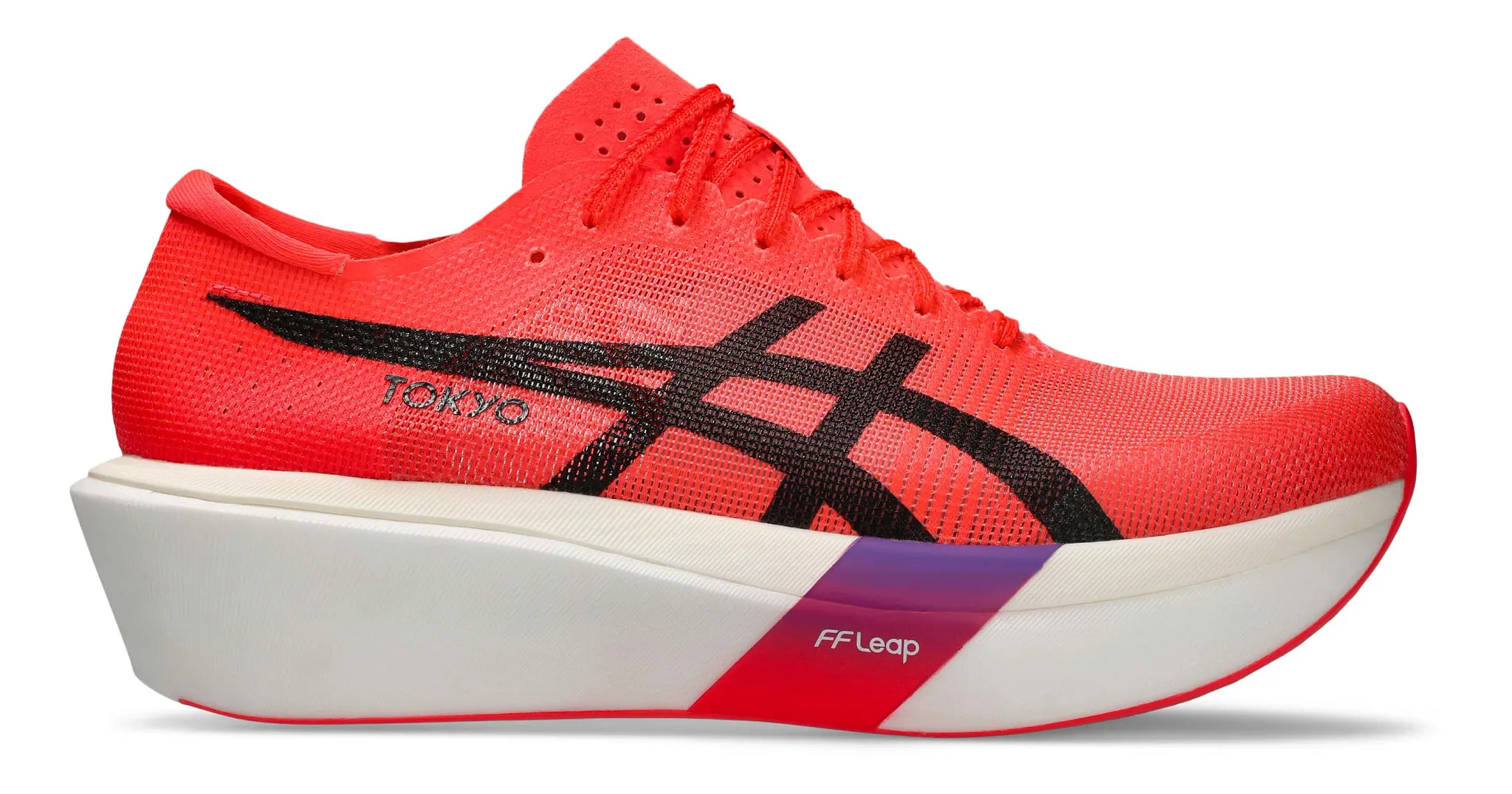
ASICS Metaspeed Sky/Edge Tokyo — what reviewers say
Ride profile: maximal cushion , neutral stability .
-
A popular, versatile race shoe that works well for most runners, though this reviewer personally struggles with blistering in it.
Fit:This reviewer personally gets blistering in this shoe due to its setup, despite generally getting on well with other ASICS shoes.
In their words: "a bit of a bargain"
-
Ran a 2:24 marathon at Loch Ness in the Sky Tokyo; the dual-density FF Leap/Turbo Plus midsole and high forefoot plate give a very bouncy ride he rates just behind the Fast-R Nitro Elite 3.
In their words: "really bouncy shoe" · "a lot of spring"
-
A great marathon-paced racer, though the softer midsole and flatter plate feel less versatile across paces than the previous Sky, with foam durability a slight concern. Tier B.
In their words: "a great shoe, though very much anchored in marathon pace" · "the foam does really take a beating"
-
A very fast, lightweight racing shoe the reviewer uses for shorter race distances (5K/10K), while preferring the Edge for half marathon and marathon.
In their words: "extremely fast and very lightweight"
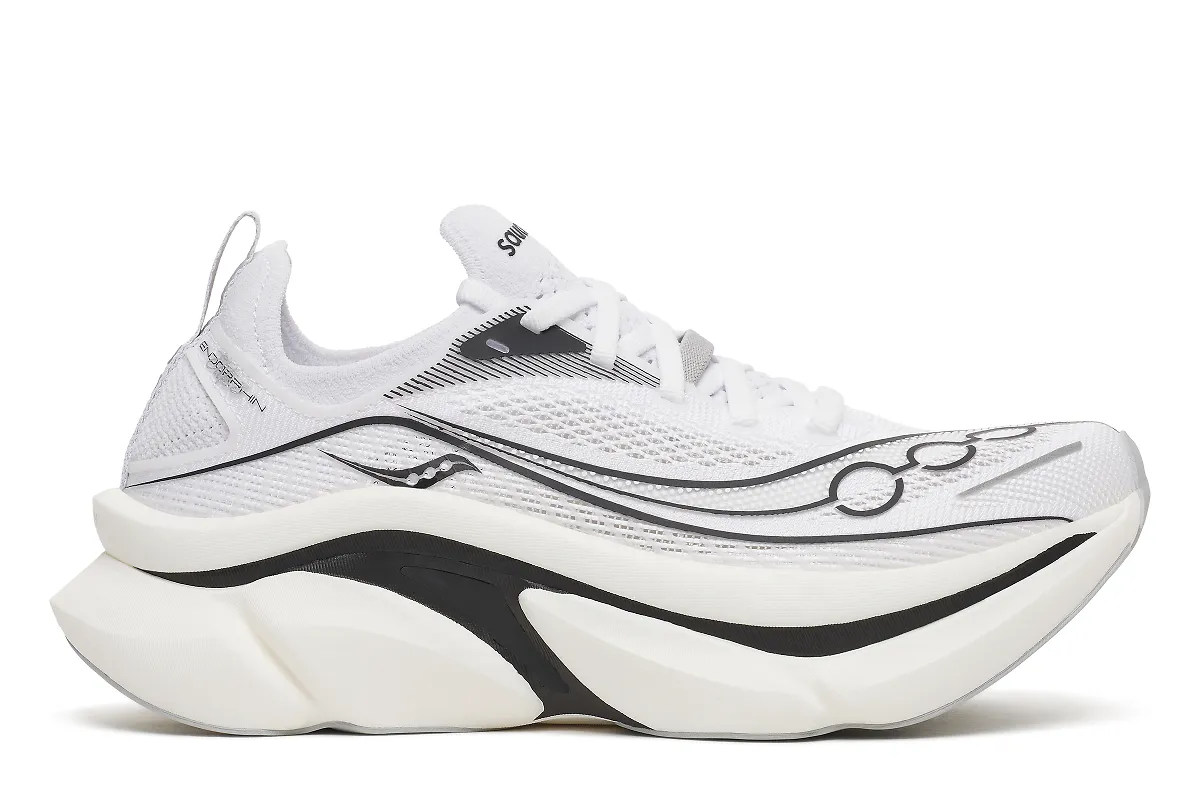
Saucony Endorphin Elite 3 — what reviewers say
Ride profile: high cushion , neutral stability .
-
Despite costing £70 more and running heavier, Parkes found the Endorphin Elite v3 softer, bouncier and noticeably faster than the SC Elite v6 in a half marathon outing, and says it's the shoe he'd pick between the two.
In their words: "really quite a lot softer" · "a lot more bouncy" · "I just run so much faster"
-
A race-shoe runner-up pick; the reviewer calls it one of the softest, bounciest race shoes around and a likely choice for an upcoming marathon.
In their words: "softer bouncier"
-
His standout favorite of the tier list — wildly soft, compressive yet reactive, superbly light with an exceptional, foot-shaped upper. Tier S.
In their words: "it just seems to handle changes of pace very, very well" · "an S tier for me"
-
On a first run, praised as by far the softest and bounciest super shoe the panel has tried, well suited to longer straight-line racing, though cornering control is a weak point.
Ride:First-time run in the shoe; tall sidewalls and dialed-in geometry make it a strong straight-line performer that responds well when the runner leans forward and engages the leg, but turning felt harder/less controlled than some other super shoes, and the soft PWRRUN foam bottoms out at top-end speed.
In their words: "the softest and bounciest super shoe" · "controlling it is another story"
Who should buy which
Use cases the reviewers above actually call out — one bullet per distinct take, attributed. Where reviewers converge (e.g. "5K to half marathon" appearing across multiple takes) the agreement is a stronger buying signal than any single voice.
Consider the ASICS Metaspeed Sky/Edge Tokyo if
- A versatile, lightweight race shoe for a range of distances, including marathons. — Ben Parkes
- 5K, 10K, and half marathon racing — particularly when going at top speed and striding out for a PB attempt — FORDY RUNS
- Racing from 5K up to the marathon — The Run Testers
- Races from 5K to marathon for runners who prefer a light, responsive, and poppy carbon plate shoe — The Run Testers
- Marathon racing and any distance where a softer, bouncier carbon-plated feel is preferred, especially on undulating courses. — The Run Testers
- Lighter runners who can maintain form over long races — EDDBUD
Consider the Saucony Endorphin Elite 3 if
- Marathon and half-marathon racing for midfoot strikers wanting maximum cushioning and reduced perceived effort, including runners who found the V2 too unstable or narrow. — EDDBUD
- Runners who like a soft, springy, bouncy racer for half marathon to marathon distances on flat, even courses. — The Run Testers
- Marathoners running 3:30 or slower who want a cushioned, forgiving race-day ride that keeps the legs fresher over longer efforts. — Believe in the Run
- A premium marathon race-day shoe for runners willing to pay a high price point. — Ben Parkes
- Racing (10K, parkrun and up) for runners who like a very soft, bouncy ride; avoid if you need stability or dislike soft shoes — The Run Testers
- Runners who want a very soft, bouncy carbon-plated race-day shoe, especially for marathons where soft cushioning helps in the late miles; also versatile enough for uptempo training after racing. — Believe in the Run
Frequently asked questions
What's the difference between the ASICS Metaspeed Sky/Edge Tokyo and the Saucony Endorphin Elite 3?
The ASICS Metaspeed Sky/Edge Tokyo is a race shoe and the Saucony Endorphin Elite 3 is a race shoe. By the numbers, the ASICS Metaspeed Sky/Edge Tokyo weighs 159g, has a 40mm heel stack and a 5mm drop, while the Saucony Endorphin Elite 3 weighs 210g, has a 40mm heel stack and an 8mm drop. MSRP is $270 for the ASICS Metaspeed Sky/Edge Tokyo and $290 for the Saucony Endorphin Elite 3.
Should I buy the ASICS Metaspeed Sky/Edge Tokyo or the Saucony Endorphin Elite 3?
Ben Parkes on the ASICS Metaspeed Sky/Edge Tokyo: A versatile, lightweight race shoe for a range of distances, including marathons. EDDBUD on the Saucony Endorphin Elite 3: Marathon and half-marathon racing for midfoot strikers wanting maximum cushioning and reduced perceived effort, including runners who found the V2 too unstable or narrow.
Per Ben Parkes, EDDBUD.
Has anyone reviewed both the ASICS Metaspeed Sky/Edge Tokyo and the Saucony Endorphin Elite 3?
Yes — Believe in the Run, EDDBUD, and The Run Testers directly compared the ASICS Metaspeed Sky/Edge Tokyo and the Saucony Endorphin Elite 3 in their reviews.
Per Believe in the Run, EDDBUD, The Run Testers.
Which is lighter, the ASICS Metaspeed Sky/Edge Tokyo or the Saucony Endorphin Elite 3?
The ASICS Metaspeed Sky/Edge Tokyo is lighter, at 159g versus 210g (men's 9) — about 51g less.
Which is cheaper, the ASICS Metaspeed Sky/Edge Tokyo or the Saucony Endorphin Elite 3?
The ASICS Metaspeed Sky/Edge Tokyo is cheaper at $270 versus $290 MSRP — about $20 less.