HOKA Tecton X 4 vs Nike ACG Ultrafly 2
A side-by-side comparison grounded in verdicts from 2 reviewers with every source linked. We don't invent quotes; every claim below is attributed.
Specs at a glance
Reviewers who wore both
Direct paired observations — reviewers who actually ran in both of these and wrote the contrast. This is the strongest comparative signal on the page.
The Ultrafly feels softer, more bouncy and absorbent over lumps and bumps than the more immediate, energetic Tecton X 4
Tecton X3 has a split plate that conforms better to trail terrain, more versatile on technical ground
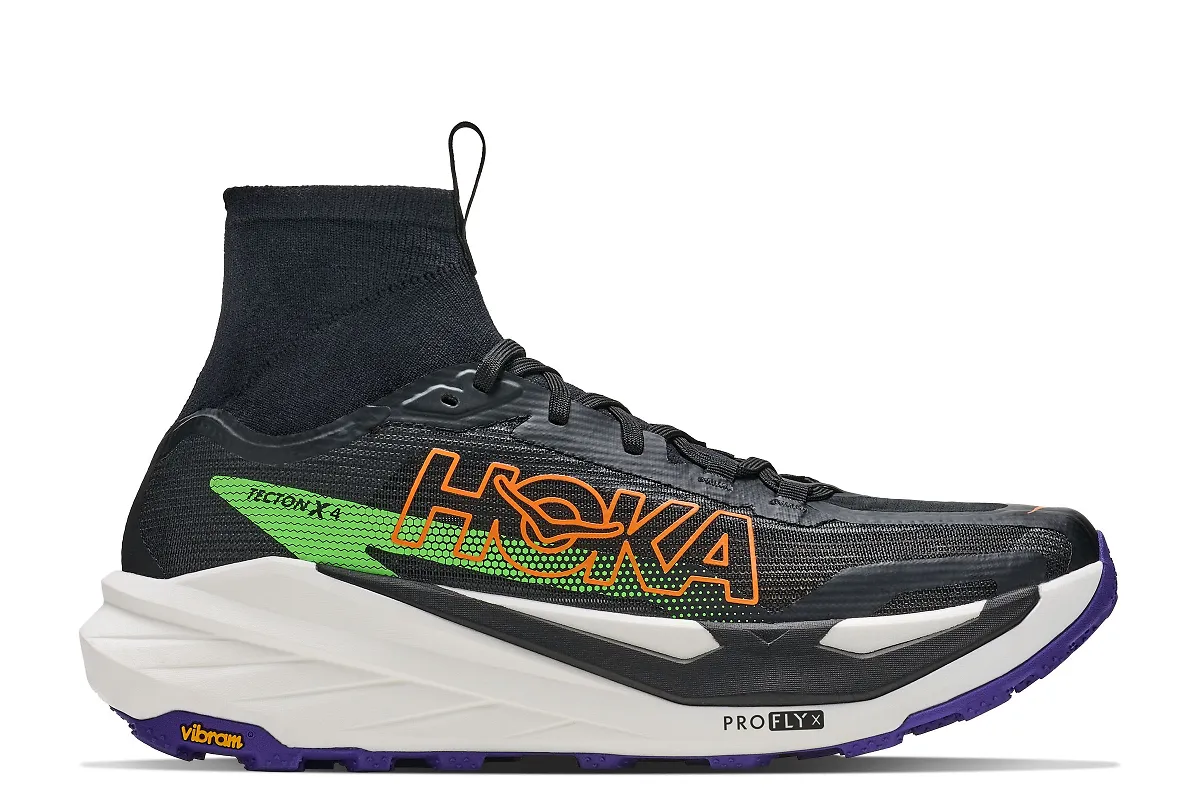
HOKA Tecton X 4 — what reviewers say
Ride profile: high cushion , neutral stability .
-
After putting 100+ miles on the Tecton X 4, the reviewers stand by their original positive review — the shoe holds its character well through wear and remains a strong long-distance trail racer despite some expected upper stretch and midsole compression.
Ride:Midsole foam compresses and loses some initial pop over 100 miles without sacrificing stability; outsole lugs show wear (forward lugs searing) after mostly technical mountain terrain, but grip stayed strong.
Fit:Testers found the shoe running slightly big after 100 miles as the matrix upper stretches out; recommend true-to-size for shorter days but sizing up half a size for 12+ hour race efforts.
In their words: "I still stand by our review" · "holding up better than I thought"
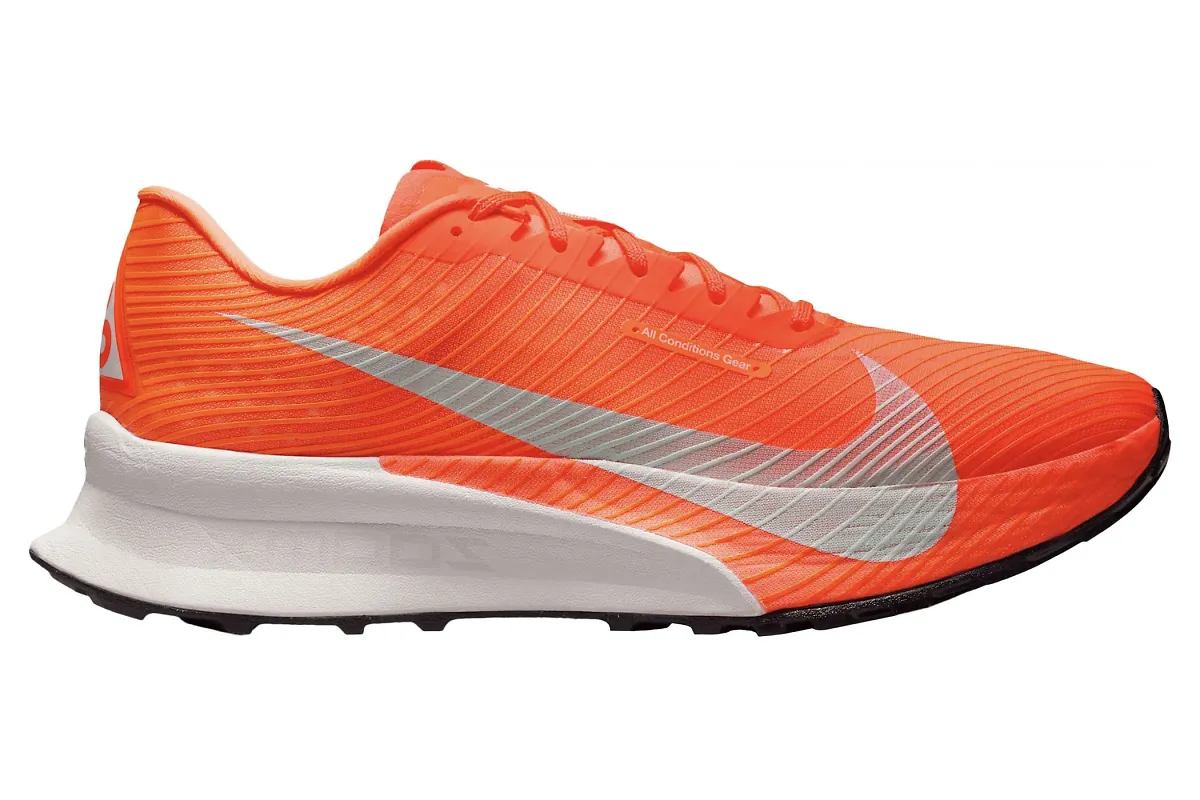
Nike ACG Ultrafly 2 — what reviewers say
Ride profile: high cushion .
-
After his first 5-mile run, the reviewer found the ACG Ultrafly protective and cushioned enough for long trail days, with plenty of energy return from ZoomX foam, though it trades away some ground feel and control on technical terrain.
Ride:Feels like a road shoe on the trail thanks to a big stack of bouncy ZoomX foam; soft and protective but sacrifices some ground feel and control on technical terrain.
Fit:True to size with enough toe box clearance and room; a slightly narrow wrap on the tongue could let in debris.
In their words: "road shoe on the trail" · "lots of energy, lots of roll" · "protective enough and cushioned enough"
-
Despite strong marketing hype and high expectations, the reviewer was disappointed with the ACG Ultrafly and wishes they loved the shoe more than they do.
Who should buy which
Use cases the reviewers above actually call out — one bullet per distinct take, attributed. Where reviewers converge (e.g. "5K to half marathon" appearing across multiple takes) the agreement is a stronger buying signal than any single voice.
Consider the HOKA Tecton X 4 if
- Long trail races and ultras across mixed terrain, including UTMB-style efforts — Believe in the Run
- Runnable, mixed-terrain ultra and trail-marathon racing where a punchy, energetic carbon-plated ride is wanted without giving up trail stability — The Run Testers
- Technical, rocky ultra-distance trail racing — Believe in the Run
- Technical and ultra-distance trail racing — Believe in the Run
Consider the Nike ACG Ultrafly 2 if
- Runners wanting a protective, cushioned trail shoe for long hours on feet, including ultra distances, who don't need maximum ground feel. — The Run Testers
- Road runners transitioning to light trail running, smooth singletrack, gravel roads, and door-to-trail scenarios. Not suited for moderate to technical terrain. — Believe in the Run
- Ultra distance trail racing for runners who prioritize efficiency over soft cushioning — Believe in the Run
Frequently asked questions
What's the difference between the HOKA Tecton X 4 and the Nike ACG Ultrafly 2?
The HOKA Tecton X 4 is a trail ultra and the Nike ACG Ultrafly 2 is a trail (light). By the numbers, the HOKA Tecton X 4 weighs 261g, has a 38mm heel stack and a 5mm drop, while the Nike ACG Ultrafly 2 weighs 269g, has a 38mm heel stack and an 8.5mm drop. MSRP is $275 for the HOKA Tecton X 4 and $260 for the Nike ACG Ultrafly 2.
Should I buy the HOKA Tecton X 4 or the Nike ACG Ultrafly 2?
Believe in the Run on the HOKA Tecton X 4: Long trail races and ultras across mixed terrain, including UTMB-style efforts. The Run Testers on the Nike ACG Ultrafly 2: Runners wanting a protective, cushioned trail shoe for long hours on feet, including ultra distances, who don't need maximum ground feel.
Per Believe in the Run, The Run Testers.
Has anyone reviewed both the HOKA Tecton X 4 and the Nike ACG Ultrafly 2?
Yes — The Run Testers and Believe in the Run directly compared the HOKA Tecton X 4 and the Nike ACG Ultrafly 2 in their reviews.
Per The Run Testers, Believe in the Run.
Which is cheaper, the HOKA Tecton X 4 or the Nike ACG Ultrafly 2?
The Nike ACG Ultrafly 2 is cheaper at $260 versus $275 MSRP — about $15 less.