Puma Deviate Nitro Elite 4 vs Saucony Endorphin Pro 5
A side-by-side comparison grounded in verdicts from 6 reviewers with every source linked. We don't invent quotes; every claim below is attributed.
Specs at a glance
Reviewers who wore both
Direct paired observations — reviewers who actually ran in both of these and wrote the contrast. This is the strongest comparative signal on the page.
Endorphin Pro 5 is broader and more stable; Elite 4 is close but slightly less accessible
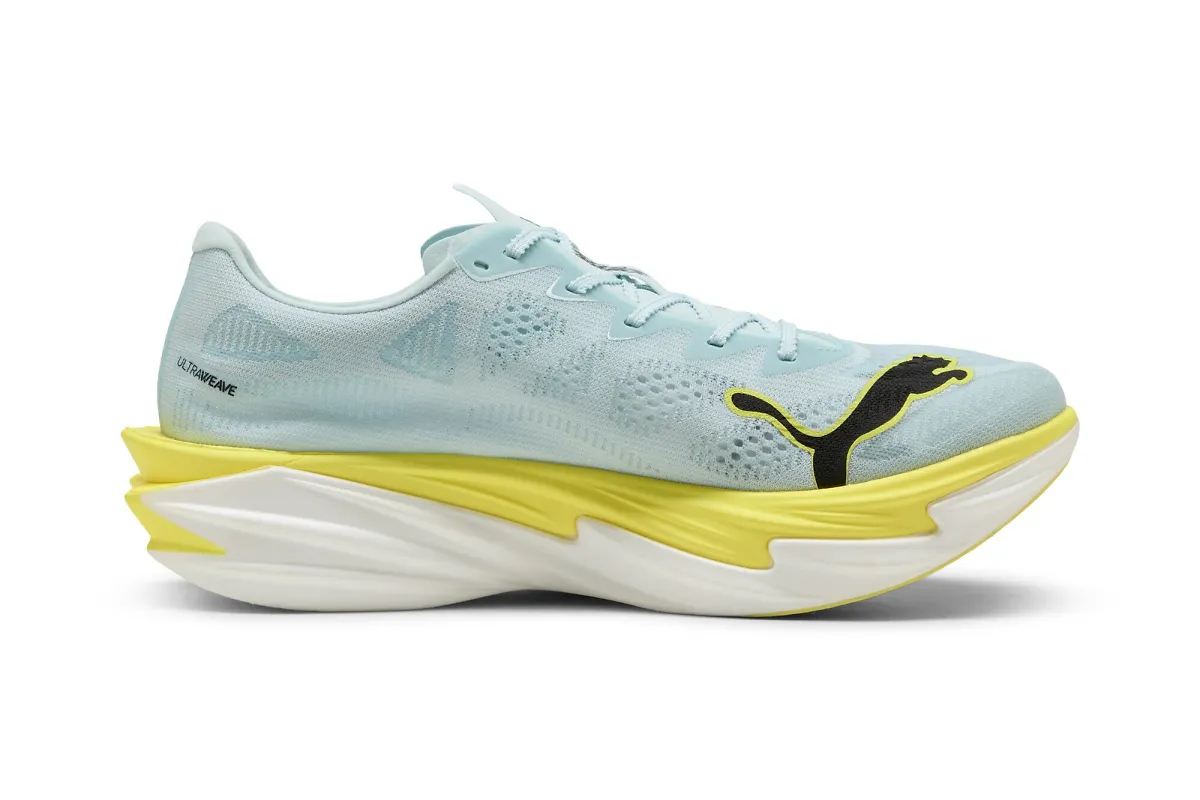
Puma Deviate Nitro Elite 4 — what reviewers say
Ride profile: high cushion , soft_plush feel , high energy return , neutral stability .
-
This reviewer's current top race day pick — versatile across 5K to half marathon distances, though it fits narrow.
In their words: "brilliant race day shoe" · "weighs about as much as a piece of paper"
-
Parkes found the Deviate Nitro Elite 4 lighter, cheaper and faster than the SC Elite v6, with a very natural ride and likely better outsole durability, and says it's the one he'd pick between the two.
In their words: "one of the lightest super shoes" · "a very natural ride" · "the faster shoe as well"
-
A responsive but overly firm and rigid shoe that hasn't clicked for him at 10K effort, better suited to milder half/marathon paces; lacks the bounce and fun of the V3. Tier D.
In their words: "just a little bit too firm and dense and rigid for me" · "doesn't seem to have the same bounce and fun factor"
-
Used heavily through the summer for fast sessions, suggesting strong satisfaction as a fast-training option.
In their words: "so much this summer for fast sessions"
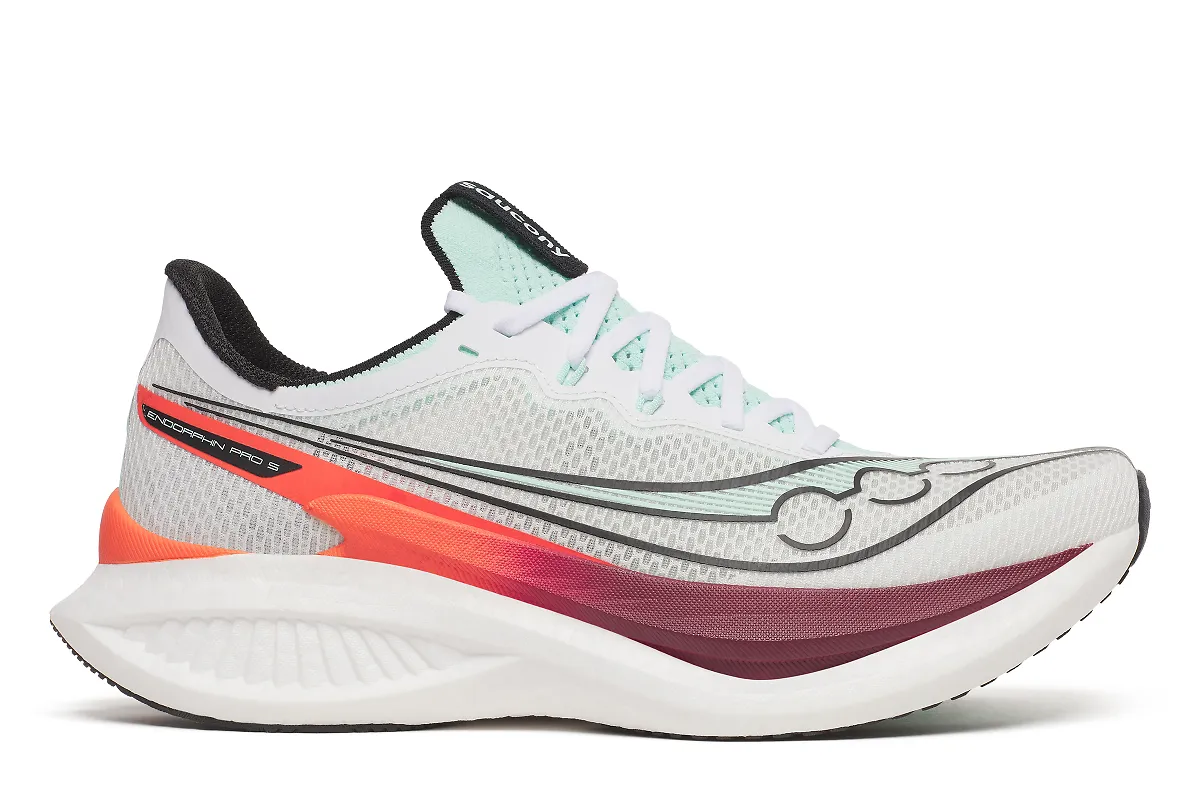
Saucony Endorphin Pro 5 — what reviewers say
Ride profile: high cushion , firm_responsive feel , high energy return , neutral stability , aggressive rocker.
-
A smooth, consistent racer with a much-improved upper, but works best for marathon-distance runners with a higher cadence rather than a longer stride. Tier C.
In their words: "a smooth operator" · "feels like a race shoe upgrade of the Azura"
-
Still one of the best everyday-runner race shoes for FORDY — the fluted plate and SpeedRoll geometry give a strong sense of speed, with a bit more stability than most other options here bar the Hyperwarp Pro, and it's often discounted.
In their words: "the feeling of speed again is really good"
-
Both reviewers found the Endorphin Pro 5 disappointing, calling it an outdated race day shoe that feels like it is from two years ago. With minimal innovation over the Pro 4, heavier weight than competitors, and firm foam that causes late-run fatigue, they rated it a pass and gave it a red light recommendation.
Ride:Foam feels firm and a bit dated compared to newer race day options. Dual foam midsole with Power Run HG on top for softer step-in feel and Power Run PB below for structure. Slotted carbon plate provides some pop but overall the shoe lacks the soft, propulsive feel of modern super shoes. Thomas experienced forefoot fatigue after 10 miles due to firmness.
Fit:Fits true to size. Accommodates wider feet despite being a race day shoe. Heel lockdown is good with no gaping around the collar. Requires untying to remove.
In their words: "the foam is a lot firmer" · "one of the heavier race day options" · "people who maybe prefer a firmer ride"
-
A subtle upper-focused update that is essentially the same shoe as the Pro 4 with a $15 tariff-driven price bump; capable but less aggressive than peers, and Kofuzi suggests grabbing discounted Pro 4s instead.
Ride:Nice compression and responsiveness from Power Run PB, but softer than ideal; slotted plate and HG top layer reduce pop. Stable heel suits midfoot/heel strikers.
Fit:Upper feels less precise, slightly baggy; feels like a cost-saving downgrade versus prior versions.
In their words: "a little bit on the soft side" · "ideal for midfoot and heel strikers" · "less aggressive than I'd like"
Who should buy which
Use cases the reviewers above actually call out — one bullet per distinct take, attributed. Where reviewers converge (e.g. "5K to half marathon" appearing across multiple takes) the agreement is a stronger buying signal than any single voice.
Consider the Puma Deviate Nitro Elite 4 if
- Confident, faster marathon runners chasing their fastest time — FORDY RUNS
- Half marathon to marathon racing, plus fast training, for runners wanting a versatile carbon shoe with more protection and a natural feel — The Run Testers
- 5K to half marathon racing, especially for runners wanting a nimble and versatile super shoe — Ben Is Running
- Not recommended by the reviewer for this rotation — passed over in favor of the older Nitro Elite 3 for feeling too stiff and harsh. — EDDBUD
- Shorter race distances — 5K, 10K, and half marathon. — Ben Parkes
- Midfoot strikers wanting the lightest possible race-day super shoe. — Ben Parkes
Consider the Saucony Endorphin Pro 5 if
- Marathon and any race distance for runners wanting soft but guided cushioning. — EDDBUD
- Heavier runners or those whose form breaks down during longer races; marathon distance where stability and a consistent ride matter — EDDBUD
- Midfoot and heel strikers wanting a less aggressive, more stable race shoe. — Kofuzi
- Faster workouts and shorter racing (5K to half marathon) for neutral runners without medial forefoot stability needs who want an aggressive, firm, snappy ride. — Doctors of Running
- Everyday marathon and half-marathon racers, heavier runners, and those with mild overpronation seeking a stable carbon-plated racer. — FORDY RUNS
- Runners who prefer a firmer, more stable race day shoe and liked the Endorphin Pro 4 — Believe in the Run
Frequently asked questions
What's the difference between the Puma Deviate Nitro Elite 4 and the Saucony Endorphin Pro 5?
The Puma Deviate Nitro Elite 4 is a race shoe and the Saucony Endorphin Pro 5 is a race shoe. By the numbers, the Puma Deviate Nitro Elite 4 weighs 170g, has a 38mm heel stack and an 8mm drop, while the Saucony Endorphin Pro 5 weighs 215g, has a 39mm heel stack and an 8mm drop. MSRP is $250 for the Puma Deviate Nitro Elite 4 and $240 for the Saucony Endorphin Pro 5.
Should I buy the Puma Deviate Nitro Elite 4 or the Saucony Endorphin Pro 5?
FORDY RUNS on the Puma Deviate Nitro Elite 4: Confident, faster marathon runners chasing their fastest time. EDDBUD on the Saucony Endorphin Pro 5: Marathon and any race distance for runners wanting soft but guided cushioning.
Per FORDY RUNS, EDDBUD.
Has anyone reviewed both the Puma Deviate Nitro Elite 4 and the Saucony Endorphin Pro 5?
Yes — The Run Testers directly compared the Puma Deviate Nitro Elite 4 and the Saucony Endorphin Pro 5 in their reviews.
Per The Run Testers.
Which is lighter, the Puma Deviate Nitro Elite 4 or the Saucony Endorphin Pro 5?
The Puma Deviate Nitro Elite 4 is lighter, at 170g versus 215g (men's 9) — about 45g less.
Which is cheaper, the Puma Deviate Nitro Elite 4 or the Saucony Endorphin Pro 5?
The Saucony Endorphin Pro 5 is cheaper at $240 versus $250 MSRP — about $10 less.