Saucony Endorphin Speed 5 vs HOKA Mach 7
A side-by-side comparison grounded in verdicts from 7 reviewers with every source linked. We don't invent quotes; every claim below is attributed.
Specs at a glance
Reviewers who wore both
Direct paired observations — reviewers who actually ran in both of these and wrote the contrast. This is the strongest comparative signal on the page.
Mach X2 has higher stack, softer springier ride and better forefoot protection for long hard runs
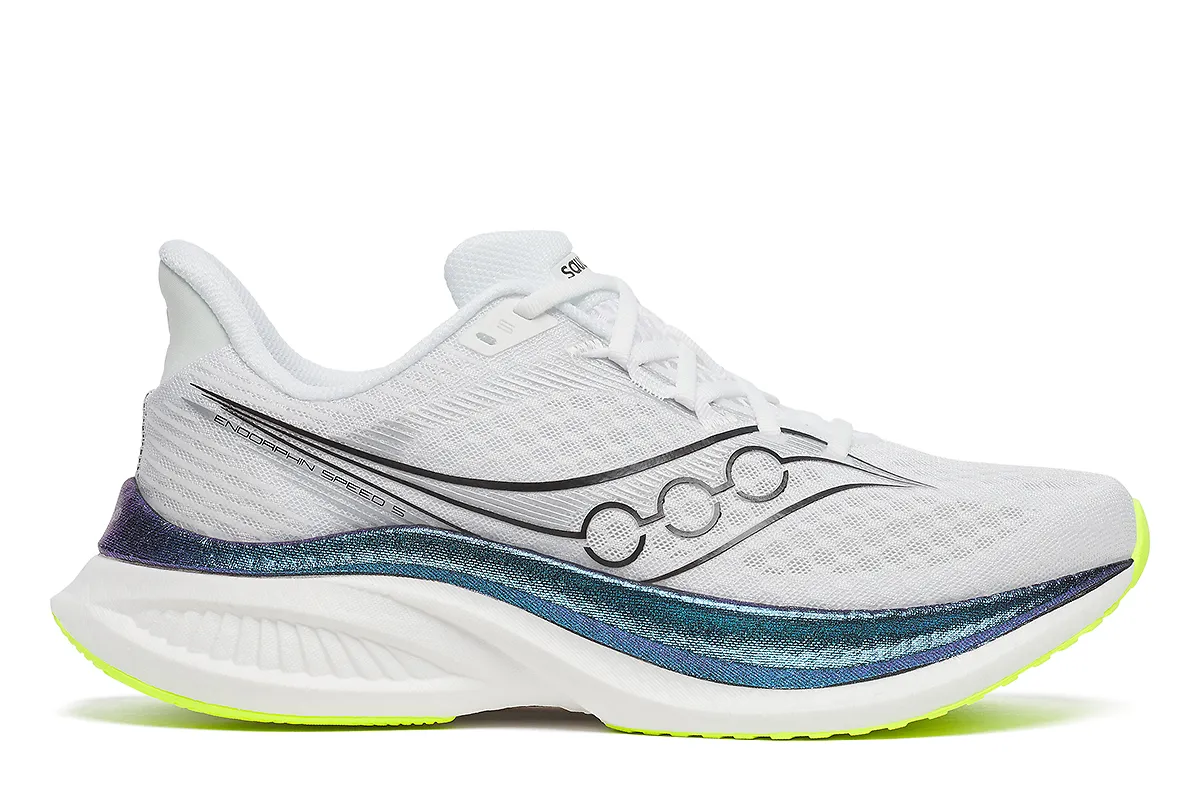
Saucony Endorphin Speed 5 — what reviewers say
Ride profile: high cushion , neutral stability .
-
Ed Bud finds the Endorphin Speed 5 stable and consistent with improved outsole grip, but says it lacks the exhilarating feel of earlier versions and is about an ounce heavier and less lively than the SC Rebel.
Ride:The denser PWR RUN PB midsole gives a more consistent, more stable ride than the SC Rebel, but with less heel stack and less of the exhilarating feel of the first couple of versions.
In their words: "the same exhilarating feel" · "more consistent feel across the footbed" · "improved outsole grip on the Speed 5"
-
The Run Testers still rate the Endorphin Speed 5 a top faster-daily pick — light, snug, and peppy thanks to PWRRUN PB foam and a nylon plate, comfortable enough for long runs too, and a smart buy now it's dropped in price.
In their words: "pleasingly light and has a fit that's snug" · "smooth and peppy fashion" · "remains a smart buy"
-
Kofuzi sees the Endorphin Speed 5 as more heel-stable than the SC Rebel but less lively at tempo paces due to its stability-oriented plastic plate, and a strong value pick now discounted to $150.
Ride:More stable in the heel than the SC Rebel, but the plastic plate gives less forefoot pop at tempo efforts than the SC Rebel or the carbon-plated Endorphin Pro
In their words: "much more stable in the heel" · "I feel like it's almost disappearing"
-
A well-named speed shoe with a flexible nylon plate — a good dual-use option for training and budget-friendly racing without the cost of a full carbon super shoe.
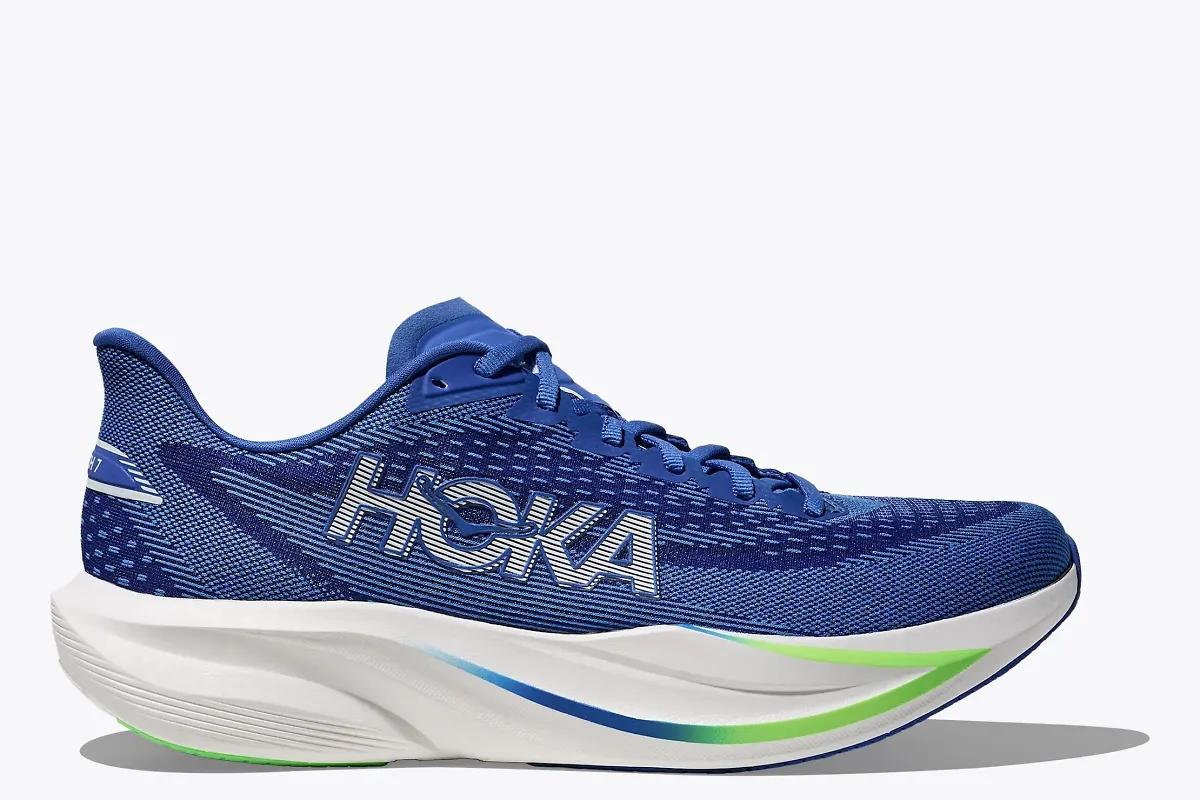
HOKA Mach 7 — what reviewers say
Ride profile: high cushion , firm_responsive feel , moderate energy return , neutral stability , moderate rocker.
-
The Run Testers rate the Mach 7 as a solid, slightly more stable trainer than the Evo SL, but find it less exciting to run fast in, so the Evo SL remains their pick.
Ride:Slightly more stable and a bit heavier and more built-up than the Evo SL, without the same aggressive quickness in the midsole; good for ticking over at all paces but not considered a fun, fast shoe by all the reviewers.
In their words: "don't find it a fun shoe" · "solid and does the job"
-
The reviewer sees the Mach 7 as better suited to faster training paces than the Clifton Pro and says it's the Hoka daily shoe he'd actually choose given its much lighter weight, despite the Pro offering more cushioning for longer runs.
Ride:Firmer than the Clifton Pro and better suited to faster tempo and threshold paces, while still capable as a daily shoe; the Pro offers more cushioning for longer runs.
In their words: "picking up the Mach 7 every day" · "slightly firmer than the Clifton Pro"
-
A simple, versatile, entry-priced daily trainer the reviewers say they'd recommend to anybody at any level.
Ride:Up-tempo trainer on a super critical foam midsole that goes with the runner when they want to pick up the pace.
Fit:Lightweight upper carried over largely unchanged from the previous version.
In their words: "it just kind of works" · "it goes with you"
-
The Mach 7 improves on its predecessor with a slightly softer and bouncier midsole and a more accommodating upper, making it a solid stable-neutral lightweight trainer.
Ride:Midsole feels a touch softer and bouncier than the previous version while remaining snappy underfoot. Stack height is tall on paper but does not feel tall on foot.
Fit:Upper is still a little snug and short in the forefoot but has opened up compared to version 6 where toes felt jammed.
In their words: "a touch softer and bouncier than the old one" · "still be snappy underfoot"
Who should buy which
Use cases the reviewers above actually call out — one bullet per distinct take, attributed. Where reviewers converge (e.g. "5K to half marathon" appearing across multiple takes) the agreement is a stronger buying signal than any single voice.
Consider the Saucony Endorphin Speed 5 if
- All-round daily training and faster efforts for runners who don't mind a firmer, snappier ride — The Run Testers
- Streamlined allrounder for marathon training and racing. — The Run Testers
- A versatile training partner to a carbon race shoe for runners wanting a fast daily trainer that can also handle easy runs and even racing — The Run Testers
- Road ultra runners who prefer ground feel and a more connected, faster-rolling ride rather than maximum cushioning. — The Run Testers
- Speed sessions and budget racing for runners who want a plated speed shoe — Ben Is Running
- Runners prioritizing heel stability and value over maximal tempo pop — Kofuzi
Consider the HOKA Mach 7 if
- Runners who want a natural, connected ride across a range of paces and distances. — The Run Testers
- Runners who want a Hoka that doesn't look or feel like a typical Hoka — slighter frames, gym/treadmill use, beginners, high school/college runners getting into speed work, everyday training that can pick up the pace for tempo or a 5K. — Run Moore
- Runners wanting energy consistency in a slightly firmer rocker ride — The Run Testers
- A versatile, stable, cushioned lightweight daily trainer for easy runs, long runs, and sustained workouts — The Run Testers
- Runners wanting a lower-volume, close-to-the-ground feel with stable neutral geometry for speed work and daily training — Doctors of Running
- Daily training miles for runners at any level; Thomas picks it for his own daily-mileage rotation slot. — Believe in the Run
Frequently asked questions
What's the difference between the Saucony Endorphin Speed 5 and the HOKA Mach 7?
The Saucony Endorphin Speed 5 is a speed trainer and the HOKA Mach 7 is a daily trainer. By the numbers, the Saucony Endorphin Speed 5 weighs 238g, has a 37mm heel stack and an 8mm drop, while the HOKA Mach 7 weighs 241g, has a 37mm heel stack and a 5mm drop. The Saucony Endorphin Speed 5 has a Nylon plate (asymmetric medial wing); the HOKA Mach 7 has none. MSRP is $175 for the Saucony Endorphin Speed 5 and $145 for the HOKA Mach 7.
Should I buy the Saucony Endorphin Speed 5 or the HOKA Mach 7?
The Run Testers on the Saucony Endorphin Speed 5: All-round daily training and faster efforts for runners who don't mind a firmer, snappier ride. The Run Testers on the HOKA Mach 7: Runners who want a natural, connected ride across a range of paces and distances.
Per The Run Testers.
Has anyone reviewed both the Saucony Endorphin Speed 5 and the HOKA Mach 7?
Yes — The Run Testers directly compared the Saucony Endorphin Speed 5 and the HOKA Mach 7 in their reviews.
Per The Run Testers.
Which is cheaper, the Saucony Endorphin Speed 5 or the HOKA Mach 7?
The HOKA Mach 7 is cheaper at $145 versus $175 MSRP — about $30 less.